 joyce
joyce Six dumplings typically contain between 200 and 400 calories, but that range swings dramatically depending on the type you’re eating. Steamed vegetable dumplings might land at the lower end, while pan-fried pork dumplings can easily push past 400 calories for the same portion. The filling, cooking method, and wrapper thickness all play major roles in the final count.
If you’re tracking your intake but don’t want to give up one of the most satisfying foods out there, you’re in the right place. We’ve tested dozens of dumpling recipes in our kitchen and broken down exactly what drives those calorie numbers up or down. Whether you’re making dumplings from scratch or ordering takeout, small tweaks make a real difference without sacrificing flavor.
The good news? You have more control than you think. Choosing steamed over fried cuts calories significantly. Leaner proteins like chicken or shrimp instead of pork reduce fat content. Even the dipping sauce matters more than most people realize. Understanding these variables means you can enjoy dumplings regularly while staying mindful of your goals, and we’ll show you exactly how to make those swaps work in practice.
The Calorie Count Breakdown: 6 Dumplings by Type
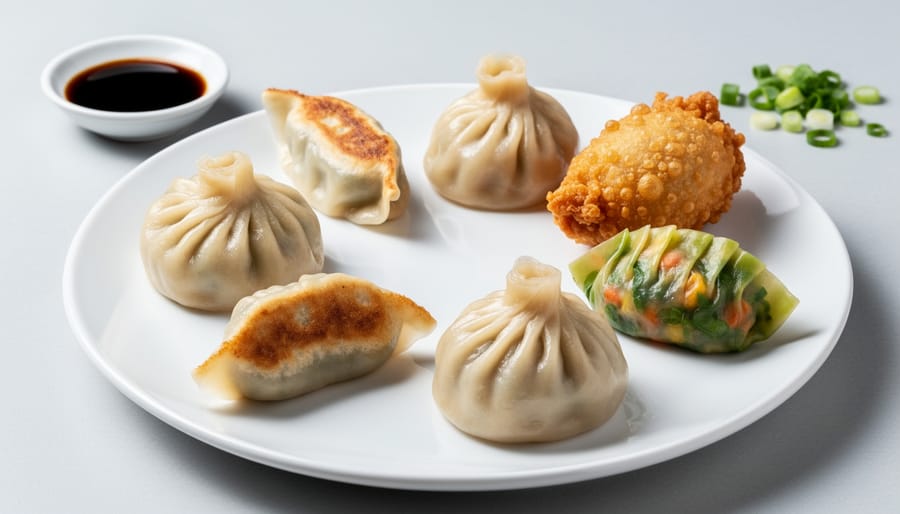
Six dumplings can range anywhere from about 150 to over 400 calories depending on what type you’re eating. That’s a huge swing, and it all comes down to three things: what’s inside, how thick the wrapper is, and whether those dumplings hit hot oil or steam.
Here’s what you can expect from the most common dumpling varieties:
| Dumpling Type | Cooking Method | Calories (6 pieces) | Main Calorie Drivers |
|---|---|---|---|
| Steamed Pork Dumplings | Steamed | 240-280 | Ground pork fat content, moderate wrapper |
| Pan-Fried Potstickers | Pan-fried | 320-400 | Oil absorption, crispy bottom, pork filling |
| Shrimp Har Gow | Steamed | 150-180 | Lean shrimp, thin translucent wrapper |
| Vegetable Dumplings | Steamed | 160-200 | Low-fat filling, standard wrapper |
| Chicken Gyoza | Pan-fried | 280-340 | Lean chicken offset by frying oil |
| Soup Dumplings (Xiaolongbao) | Steamed | 200-250 | Pork filling plus rich broth inside |
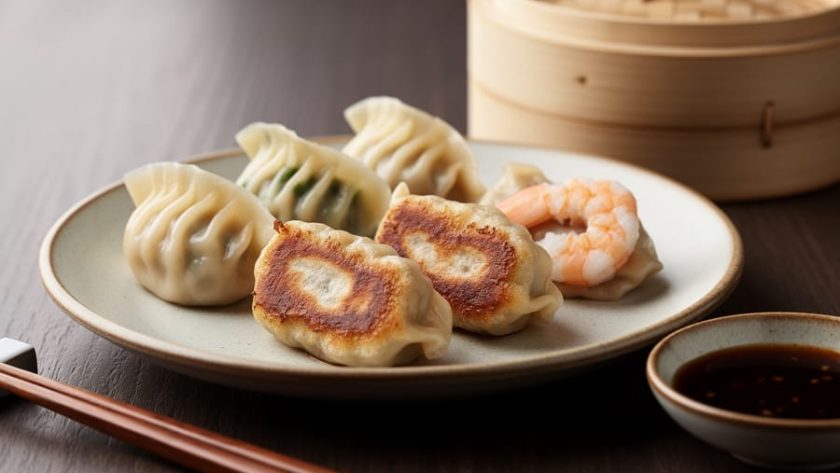
Steamed dumplings with shrimp or vegetables sit at the lower end because the filling is naturally lean and there’s no added cooking fat. Har gow, those delicate dim sum classics with the see-through wrapper, are among the lightest options you’ll find. The wrapper itself is thinner than most, which shaves off a few extra calories.
Pan-fried dumplings, on the other hand, soak up a fair amount of oil during cooking. That crispy, golden bottom everyone loves comes with a calorie cost. Even if the filling is chicken instead of pork, the frying process can add 80 to 120 calories compared to the steamed version of the same dumpling.
Pork dumplings land somewhere in the middle when steamed, but the fat content in the filling matters. A filling made with lean pork and plenty of vegetables will clock in lower than one that’s mostly fatty ground pork and very little else. Soup dumplings add another layer, literally, with the rich broth tucked inside alongside the meat, which bumps up both flavor and calorie count.
Wrapper thickness plays a quieter but real role. Thicker, doughier wrappers mean more flour and more calories per dumpling. This is why some homemade or regional styles can vary even within the same filling type.
What Actually Adds the Calories
Understanding what drives up the calorie count in dumplings helps you make smarter choices without guessing. Three main factors determine whether your dumpling is a light bite or a more indulgent treat.
The wrapper forms the foundation of every dumpling’s calorie profile. Most traditional dumpling wrappers are made from wheat flour and water, contributing roughly 30-50 calories per dumpling before you even consider the filling. Thicker, chewier wrappers naturally pack more calories than delicate, translucent ones. This is why soup dumplings with their paper-thin skins often clock in lighter than thick-skinned potstickers.
The filling is where calories can really climb. Pork and beef dumplings typically contain ground meat with a fat content of 15-20%, adding both flavour and calories. A single pork dumpling might get 40-60 calories just from the filling, while shrimp or vegetable versions might contribute only 20-30 calories. The difference comes down to fat content. Vegetables and lean proteins like shrimp are naturally lower in calories, while fattier meats drive the numbers up quickly.
The cooking method makes the biggest swing in final calorie count. Steaming adds no extra calories, keeping the dumpling at its base level. Pan-frying is a different story. When dumplings hit a hot, oiled pan to create that crispy, golden bottom, they absorb oil during cooking. This single step can add 30-50 calories per dumpling, sometimes more if they’re generously fried. Deep-fried dumplings absorb even more oil, potentially doubling the calorie count compared to their steamed counterparts.
Knowing these three contributors gives you the power to choose dumplings that fit your goals.
Lighter Dumpling Options That Still Satisfy
Steamed vs. Pan-Fried: The Big Difference
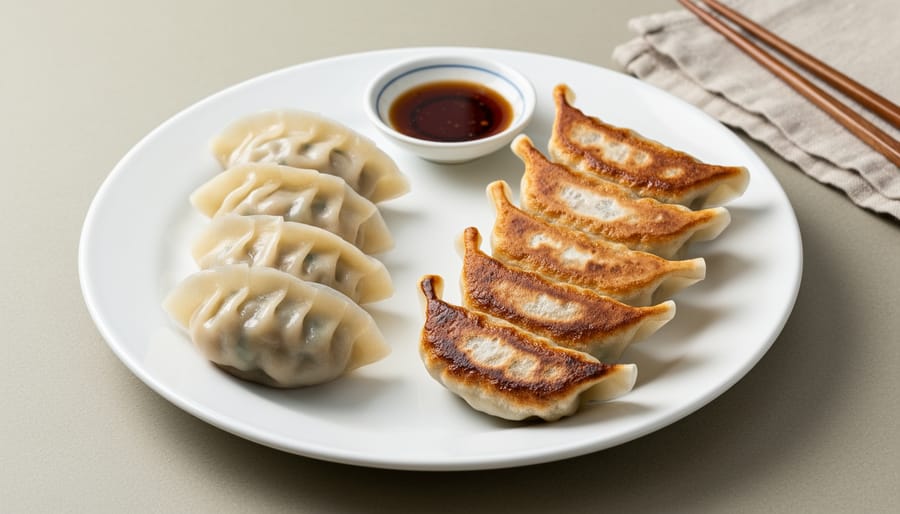
The moment you swap steamed dumplings for pan-fried ones, you’re adding oil, and oil packs 120 calories per tablespoon. A typical batch of six potstickers soaks up anywhere from half to a full tablespoon during pan-frying, which translates to an extra 60-120 calories compared to their steamed counterparts.
Here’s the real-world difference: six steamed pork dumplings clock in around 220 calories, while the same dumplings pan-fried jump to 280-320 calories. The filling stays identical; it’s purely the cooking fat making that difference.
Steaming uses only water vapor, so the wrapper stays tender without absorbing any additional fat. Pan-frying creates that crispy, golden bottom we all love, but it comes at a calorie cost. If you’re watching your intake but still want texture, try steaming first then giving just a quick sear with minimal oil, you’ll get a hint of crispness for a fraction of the extra calories.
Vegetable and Seafood Fillings
Shrimp, mushroom, and vegetable dumplings naturally contain fewer calories because the fillings themselves are lighter. Six steamed shrimp dumplings typically clock in around 150-180 calories, while the same number of pork dumplings can easily hit 250-300. Mushrooms and vegetables add bulk and texture without the saturated fat that comes with ground meats.
The trade-off? These lighter fillings can feel less rich, but a few tweaks fix that. Mincing water chestnuts or bamboo shoots into vegetable dumplings adds satisfying crunch. For shrimp varieties, look for versions with a bit of minced scallop or crab mixed in, the seafood depth makes each bite more substantial. Mushroom dumplings benefit from a mix of shiitake and oyster mushrooms rather than a single variety, building umami complexity.
Dipping sauce matters too. A punchy ginger-soy or chili oil lets you taste bold flavor without needing fatty filling to carry it. These lighter dumplings work especially well when you’re eating more than six, since the calorie savings add up quickly.
Making Lower-Calorie Dumplings at Home
Making your own dumplings at home is the single best way to control what goes into them, and that includes the calorie count. When you shape each dumpling yourself, you decide exactly how much oil touches the pan, how lean the filling is, and whether to add extra vegetables for bulk. The result? Dumplings that can easily shave off 30-50 calories per serving compared to restaurant versions, without sacrificing the satisfaction of that first juicy bite.
Start with the wrapper. Store-bought wonton wrappers are thinner than traditional dumpling skins, which means fewer calories per piece, usually around 20-25 calories each instead of 35-40. If you are making dough from scratch, roll it slightly thinner than you think you should; the filling is what people remember, not the wrapper thickness. Our step-by-step dumplings guide shows you how to get that balance right without tearing the dough.
For the filling, lean proteins make a real difference. Ground chicken or turkey breast can replace pork without losing moisture if you add finely minced mushrooms or grated zucchini, the vegetables release liquid as they cook, keeping everything tender. A 70/30 or even 80/20 mix of lean protein to vegetables works beautifully. Shrimp is naturally low in calories and pairs well with ginger, garlic, and a handful of chopped water chestnuts for crunch.
Here are the key swaps that work, based on our recipe testing:
- Replace half the meat with finely chopped cabbage, mushrooms, or carrot, squeeze out excess moisture before mixing.
- Use ground chicken breast or shrimp instead of pork shoulder; add a teaspoon of sesame oil for richness without overdoing fat.
- Steam instead of pan-fry, set up a bamboo steamer or use a metal rack over simmering water for 8-10 minutes.
- Skip the oil altogether by using parchment rounds in your steamer, or give dumplings a light mist of cooking spray if you want a hint of browning.
Steaming is your friend here. It adds zero calories and keeps the filling moist while letting the wrapper stay delicate. If you crave that crispy bottom, try the steam-fry method: a quick sear with just one teaspoon of oil in a nonstick pan, then add a splash of water and cover to steam through. You get texture and browning with a fraction of the fat.
For more techniques that professionals use to get dumplings right every time, check out these dim sum tips they cover pleating, sealing, and flavor layering that keeps homemade dumplings just as crave-worthy as any restaurant version.
Balancing Dumplings in Your Meal
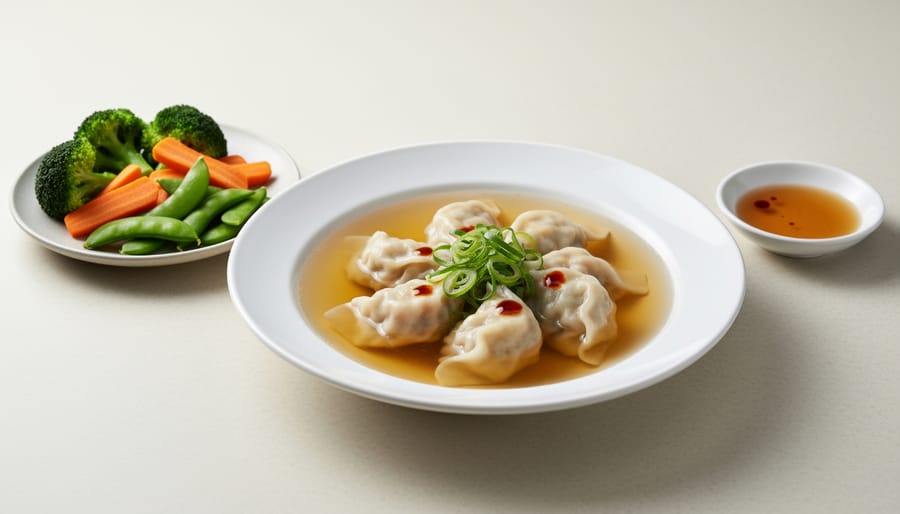
Six dumplings work beautifully as an appetizer to start a larger meal, but they can feel light if you’re treating them as the main event. The key is building around them rather than just piling on more dumplings.
When six dumplings are your centerpiece, pair them with broth-based soups like miso, egg drop, or hot and sour. The liquid adds volume and warmth without many calories, and it slows you down so you feel satisfied. A big bowl of soup plus your dumplings creates a complete meal that feels generous.
Vegetable stir-fries are another smart companion. Load up on bok choy, snap peas, broccoli, or mushrooms seasoned simply with garlic, ginger, and a splash of soy sauce. The vegetables add bulk, fiber, and nutrients while keeping the overall calorie count reasonable. You get crunch, freshness, and plenty to chew on alongside your dumplings.
Fresh salads with Asian-inspired dressings work surprisingly well too. Think shredded cabbage, cucumber, carrot ribbons, and cilantro with a light sesame-ginger vinaigrette. The crisp texture contrasts nicely with soft, savory dumplings.
If you’re cooking at home and want everything in one dish, try a one-pan twist that combines dumplings with vegetables and broth for balanced, hands-off comfort.
The goal is satisfaction without overdoing it. Six dumplings surrounded by smart, flavorful sides turn a small portion into a proper meal that leaves you happy, not hungry.
Restaurant vs. Homemade: What to Expect
Restaurant dumplings pack more calories than you’d expect. Six dumplings from your favorite dim sum spot often clock in 50-100 calories higher than the same type made at home. Why? Restaurants use generous amounts of oil for pan-frying, and their dumpling wrappers tend to be thicker. The filling typically contains more fat and salt for maximum flavor, since restaurants prioritize taste over calorie counts.
At home, you control every ingredient. You can brush on just a teaspoon of oil for crisping, use leaner meat, and load up on vegetables without anyone giving you a second look. Your six homemade potstickers might contain 180 calories while the restaurant version hits 280.
When ordering out, ask for steamed dumplings instead of fried. Request sauce on the side so you control how much you use, those little dishes of soy sauce and chili oil add up quickly. Consider sharing an order of six with a friend and pairing them with a vegetable-heavy dish. Some places offer “steamer baskets” that let you sample multiple types, making it easier to keep portions in check while still enjoying variety.
Dumplings aren’t something you need to give up just because you’re watching calories. Whether you’re steaming a batch of vegetable-filled wontons or treating yourself to a few pan-fried potstickers, there’s always room for them in a balanced diet. The trick is knowing what you’re working with and making choices that match your goals without sacrificing the flavors you love.
Try experimenting with different fillings, cooking methods, and wrapper styles until you find combinations that satisfy both your taste buds and your calorie budget. Every kitchen is different, and your perfect dumpling might surprise you.
What’s your go-to strategy for keeping dumplings lighter? Maybe you’ve discovered a filling combination or cooking technique that works brilliantly. Share your tips in the comments, we’d love to hear what’s working in your kitchen.