Showing: 1 - 8 of 8 RESULTS
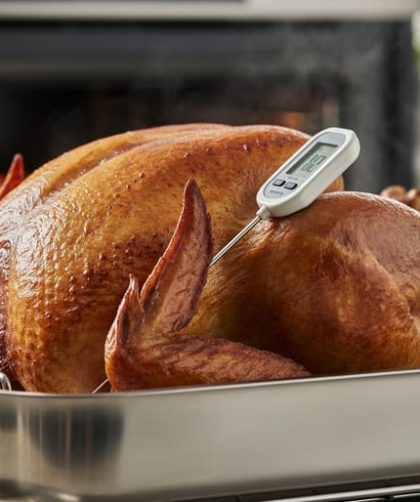
“Turkey roasting in an oven with a meat thermometer probe inserted into the thickest part of the thigh.”

How to Master Turkey Cooking Times and Temperatures Every Time

Cooking a turkey to perfection means hitting two essential numbers: an oven temperature of 325°F and an internal temperature of 165°F in the thickest part of the thigh. For timing, plan on roughly 25 minutes per pound as your baseline guideline, though oven variability means a reliable meat thermometer is your best friend in the kitchen. Getting turkey right isn’t about guesswork or vague instructions. It’s about understanding the specific temperatures that keep your bird both safe to eat and deliciously moist, plus knowing how cooking time scales with the size of your turkey.
Key …
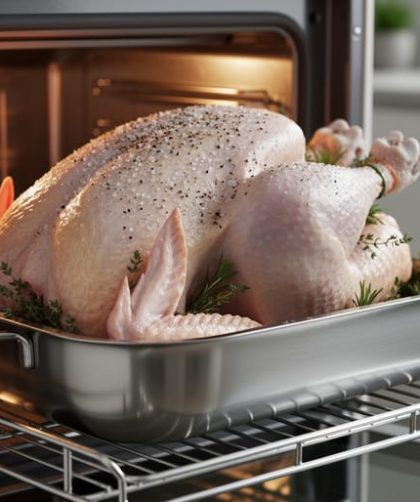
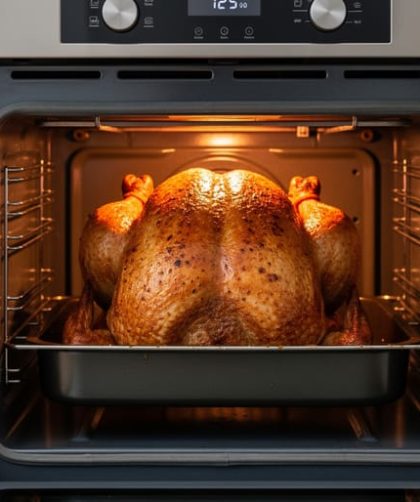
An unstuffed turkey roasting in a stainless pan inside a modern oven, shown under warm oven light.

5 Kg Turkey Cooking Time: Quick Reference Chart for Busy Cooks

A 5 kg turkey (about 11 pounds) needs 2 hours and 45 minutes to 3 hours and 15 minutes in a 325°F oven when unstuffed, or 3 hours to 3 hours and 40 minutes when stuffed. The bird is safe to eat when a meat thermometer inserted into the thickest part of the breast reads 165°F. Whether you’re hosting your first holiday dinner or just need a quick timing check while prepping your meal, getting this right means the difference between a juicy centerpiece and a dry disappointment.
Key Takeaway: Plan 13…

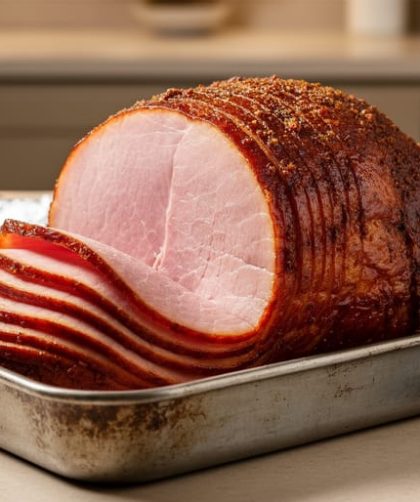
“Kirkland spiral ham in a roasting pan with glossy glaze and spiral slices, photographed on a kitchen countertop in warm lighting.”

How to Heat Kirkland Spiral Ham in 3 Simple Steps

Good news: your Kirkland spiral ham is already fully cooked, so you’re simply reheating it to an internal temperature of 140°F. Plan on heating at 325°F for 12 to 15 minutes per pound, which means an eight-pound ham will be table-ready in about 90 minutes to two hours. The real goal here isn’t cooking; it’s warming the meat through without drying it out, and keeping it moist while the edges caramelize slightly.
Key Takeaway: Your Kirkland spiral ham is pre-cooked and needs only reheating to 140°F. Heat at 325°F for 12-15 minutes per pound, keeping the ham covered to …

“Golden-brown whole turkey roasting inside a stainless-steel oven with warm oven light highlighting crisp skin.”

How to Cook a Turkey in the Oven: A Step-by-Step Guide for Perfect Results

Cooking a whole turkey in the oven means roasting it at 325°F (163°C) until the internal temperature reaches 170°F (77°C) for an unstuffed bird or 180°F (82°C) for a stuffed one, measured in the thickest part of the thigh. This method delivers juicy, golden-brown results perfect for holiday gatherings and special occasions, with cooking times ranging from about 3 to 5 hours depending on the size of your bird.
If you’ve never roasted a turkey before, the process might feel intimidating, but it’s surprisingly straightforward once you understand the basics. The key is managing temperature and time correctly while …

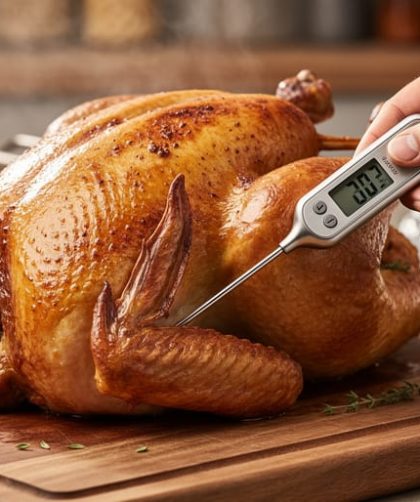
Chef checking the internal temperature of a roasted turkey with a digital meat thermometer inserted into the thigh.

How to Calculate Turkey Cooking Time Per Pound (Accurate Roasting Times)

Roasting a turkey takes approximately 13 to 17 minutes per pound at 350°F (177°C) for an unstuffed bird, and 15 to 18 minutes per pound for a stuffed one. That simple formula gives you a ballpark estimate, but here’s what matters more: your turkey is done when a meat thermometer reads 170°F (77°C) in the thickest part of the thigh for an unstuffed turkey, or 180°F (82°C) for a stuffed bird (with the stuffing itself reaching at least 165°F / 74°C). Time estimates help you plan your day, but temperature tells you when it’s safe to serve.
Before we dive into the timing charts, let’s clear up a dangerous …

Making Colorful Dumplings with Helen You

Helen You spent her early life in China. There, she didn’t only use wheat flour to make dumpling dough. Instead, she also used cornmeal to add extra texture. And now, she wants to show us how to put some colorful twist to our dough.
Prepare 250g of flour, 175ml of water, a pinch of salt, and 1 egg white. These will be the base ingredients for the dough.
For the coloring, Helen uses natural ingredients. Here she will show us how to add green color into the dough using spinach puree. If you want to add red color, you …

Wilson Tang’s Tips in Making Dim Sum

Wilson Tang, the current owner of the oldest Chinese restaurant in New York City, is sharing tips in his dim sum-making process. Read on to know what the master has to tell to us.
Steaming the dim sum
The most ideal tool to use here is a bamboo steamer. But if you don’t have one, you use any other steamer as an alternative. 
Even if you can’t find a single steamer in your house you can make a DIY steamer using a heat-proof plate as the steamer surface and three foil balls as the supports.
…

Celebrating the Art of Noodle Making with Hetty McKinnon

In her newest book, Hetty provides us with easy-to-make recipes so that you can improve your noodle-making skills at home. But we don’t want to talk deeply about her book here. Hetty wants to show us the tips to make her version of noodle, which has similar ingredients to the famous hand-pulled biang biang noodles but is handled in a much simpler way.
Use high-gluten flour
To improve the chewiness of your noodles, you should use high-gluten flour. All-purpose flour actually works just fine, but it will result in less chewiness.
The dough…