 joyce
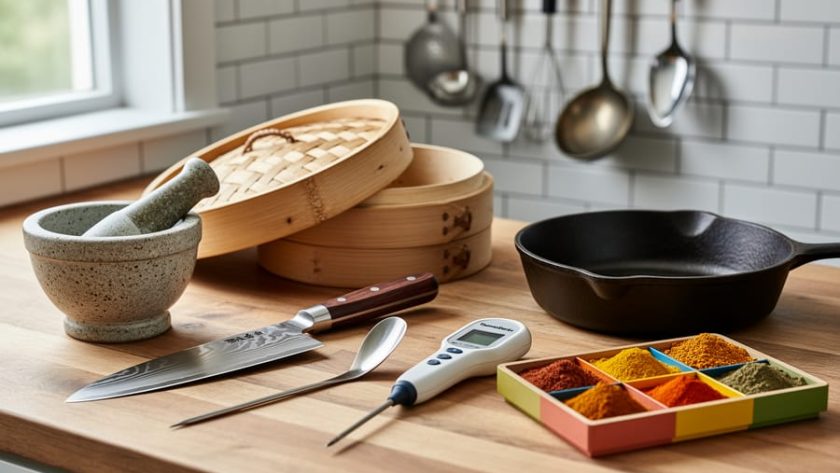
joyce Your kitchen likely holds the usual suspects: chef’s knives, cutting boards, mixing bowls, and a good skillet. But beyond these essentials lies a world of specialized tools that can transform the way you cook, from authentic international cookware tested over centuries to clever modern gadgets that solve problems you didn’t know had solutions.
Unique cooking equipment falls into three categories worth exploring. First, traditional tools from global cuisines that bring authenticity and technique to dishes you can’t quite replicate with standard gear. Second, specialized devices designed for single tasks they perform exceptionally well. Third, innovative modern tools that genuinely improve on old methods rather than gathering dust in your drawer.
The challenge isn’t finding unique equipment (a quick scroll through any kitchen store reveals hundreds of options). It’s identifying which tools actually earn their place in your kitchen. After years of testing recipes and gathering feedback from home cooks across Canada, I’ve learned that the best specialty equipment shares common traits: it solves a real cooking problem, works reliably, and gets used often enough to justify the storage space.
This guide walks through 15 distinctive kitchen tools that meet those standards. Some you’ll recognize but might not own yet. Others will be completely new. Each one opens doors to techniques or cuisines that standard equipment simply can’t handle as well, helping you expand your cooking repertoire with confidence.
What Makes Cooking Equipment ‘Unique’?
Before filling your kitchen with every interesting gadget you come across, it helps to understand what actually qualifies as “unique” versus just another version of something you already own.
The tools in this guide meet at least one of three criteria. First, they solve a specific cooking problem that standard equipment can’t address efficiently. A fish spatula’s thin, angled blade lets you slide under delicate foods without tearing them, something a regular turner struggles with. Second, they enable techniques or recipes that are difficult or impossible with common tools. You can’t make authentic round tortillas with a rolling pin the way a tortilla press delivers them, and a mortar and pestle releases aromatic oils from spices that electric grinders simply pulverize.
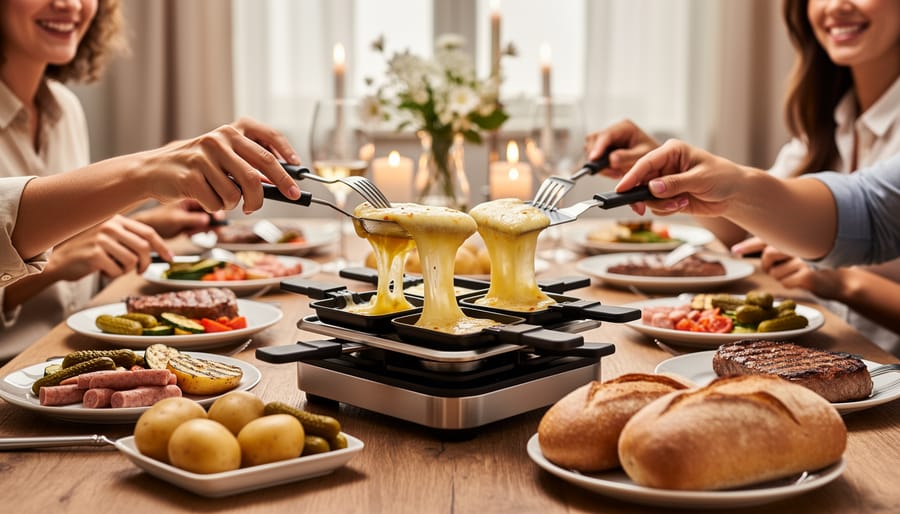
Third, these tools often carry cultural or regional specificity that brings authenticity to certain cuisines. A takoyaki pan isn’t just a fun novelty, it’s designed specifically for the batter consistency and cooking method that makes real Japanese street food work. Similarly, a raclette grill replicates the Swiss tradition of melting cheese tableside in a way no broiler or stovetop setup can match.
What didn’t make the cut? Variations on tools you likely own, like yet another style of vegetable peeler, or single-use gadgets that duplicate what a knife does perfectly well. The fifteen items ahead earn their spot by genuinely expanding what you can accomplish in your kitchen.
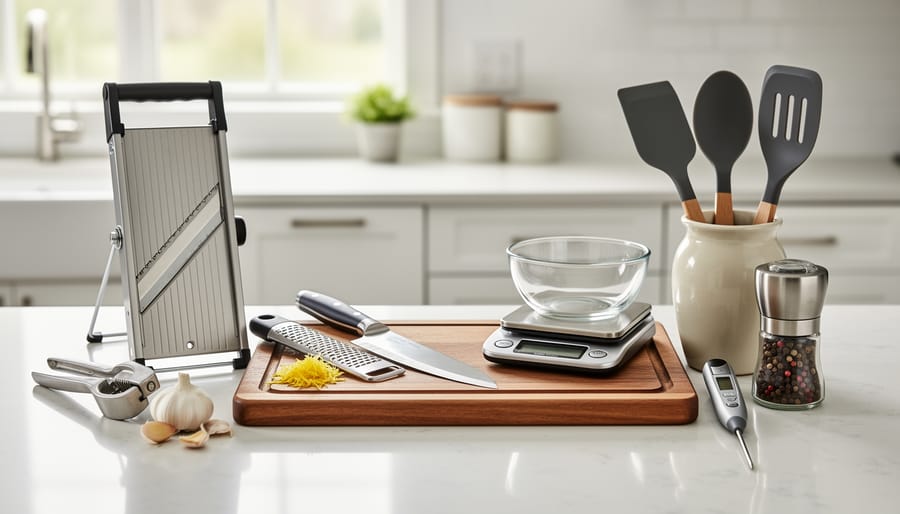
15 Unique Cooking Tools Worth Adding to Your Kitchen
1. Spider Strainer (Asian Wire Skimmer)
This traditional Chinese tool features a wide wire basket (usually brass or stainless steel) attached to a long bamboo handle, designed specifically for lifting food out of hot oil or boiling water. The spider skimmer for frying excels where slotted spoons fail: the broad, shallow basket lets you scoop multiple dumplings at once, skim tempura bits from oil, or blanch vegetables without them slipping through. The wire mesh drains instantly while keeping delicate foods intact.
Home cooks love it for Asian cooking tasks like retrieving wontons or spring rolls, but it’s equally brilliant for pasta, breaded cutlets, or fishing out bay leaves. The long handle keeps your hands safely away from heat. Available at Asian grocery stores across Canada and online retailers, expect to pay $8-15 for a quality stainless version that’ll last decades.
2. Bench Scraper (Dough Scraper)
A bench scraper looks deceptively simple, just a rectangular blade attached to a handle, but bakers consider it absolutely essential. The rigid metal or flexible plastic blade excels at dividing bread dough into equal portions, scraping sticky dough off work surfaces without leaving residue, and transferring chopped ingredients from cutting board to pan in one swift motion.
What makes this tool unique is its versatility beyond baking. You can use the straight edge to create clean lines when frosting sheet cakes, crush garlic cloves with a quick press, or even scrape down your counters after messy prep work. The metal versions typically feature measurement markings along the edge, helping you portion dough precisely without extra tools. Canadian bakers particularly appreciate how it handles cold butter when making pie dough, the blade cuts through cleanly without warming the fat.
3. Japanese Mandoline Slicer
The Japanese mandoline takes a minimalist approach, a razor-sharp diagonal blade set in a lightweight handheld frame, usually with a safety guard that doubles as a pusher. Unlike bulky French mandolines with multiple blade inserts and adjustment knobs, Japanese versions focus on doing one thing exceptionally well: creating uniform, paper-thin slices with a single smooth stroke.
This tool shines when you need translucent cucumber rounds for salads, feather-light radish slices for garnishes, or consistent potato chips. The diagonal blade angle requires less downward pressure than straight blades, which means cleaner cuts that don’t bruise delicate vegetables. Many home cooks find Japanese mandolines easier to store and clean than their French counterparts.
The catch? That incredible sharpness demands respect and careful use of the guard. Once you’re comfortable with the technique, you’ll reach for it whenever precision matters.
4. Mouli Food Mill
The Mouli food mill is a hand-cranked French kitchen tool that creates incredibly smooth purees by forcing food through interchangeable discs while catching skins, seeds, and fibrous bits in the top chamber. It’s what professional chefs reach for when making velvety tomato sauce or restaurant-quality mashed potatoes.
What makes it unique is the combination of pureeing and straining in one motion. Unlike blenders that incorporate everything (including bitter tomato seeds) or potato ricers that leave lumps, the food mill gives you complete texture control through different disc sizes: fine for baby food and smooth sauces, medium for mashed potatoes, coarse for chunky applesauce.
I use mine constantly for tomato sauce because it removes seeds and skins while creating the perfect consistency. It also makes the fluffiest mashed potatoes without the gluey texture that electric mixers produce from overworking the starches.
5. Tortilla Press
A tortilla press transforms homemade tortillas from a frustrating rolling pin struggle into a satisfying 3-second process. This simple mechanical tool consists of two flat metal plates connected by a hinge, with a lever that creates even pressure across the entire dough ball. The result? Perfectly round, uniformly thick tortillas that cook evenly and taste miles better than store-bought versions.
Cast iron models weigh more and provide superior pressure for corn tortillas, which require firm compression to hold together without wheat gluten. Aluminum presses work well for flour tortillas and are lighter to handle and store. Both types typically measure 6 to 8 inches in diameter.
The press excels at consistency. Every tortilla comes out the same thickness, eliminating the thick centers and paper-thin edges that happen when rolling by hand. This consistency means tortillas cook at the same rate and fold without cracking. Canadian home cooks find presses particularly valuable for making fresh corn tortillas, since quality masa harina is widely available but fresh corn tortillas are harder to find than flour versions in many areas.
6. Takoyaki Pan
A takoyaki pan features rows of half-sphere indentations that create perfectly round Japanese street food at home. Traditional cast iron versions heat evenly and develop seasoning over time, while modern electric models offer temperature control for beginners.
Beyond authentic takoyaki (wheat batter balls filled with octopus, green onion, and pickled ginger), this pan excels at breakfast experiments. Fill the spheres with pancake batter and berries, or try savory versions with cheese and herbs. The unique shape makes portion control automatic and presentation impressive.
Canadian home cooks often discover takoyaki pans at Asian grocery stores or through online retailers. Cast iron pans require stovetop use and careful temperature management, too hot and exteriors burn before interiors cook through. Practice develops the signature turning technique that creates the characteristic golden crust.
7. Silicone Baking Mats with Measurement Guides
These French-origin mats have quietly revolutionized home baking by printing measurement guides directly onto food-grade silicone. Instead of flouring your counter or hunting for the right-sized bowl to trace, you roll dough within printed circles that show exact diameters for pie crusts, pizza bases, or cookie portions. Better versions include ruler markings along the edges and conversion charts showing temperature, weight, and volume equivalents.
The practical advantage extends beyond measurements. The silicone surface prevents sticking without added flour, which can toughen pastry dough. You roll directly on the mat, transfer it to your baking sheet, and peel the dough off cleanly. After baking, the mat washes easily and stores flat or rolled. For anyone who bakes regularly, these mats eliminate guesswork and deliver consistent results batch after batch. Canadian bakers particularly appreciate the Celsius and metric measurements printed alongside imperial units.
8. Fish Spatula
A fish spatula looks nothing like typical cooking spatulas. Its blade is exceptionally thin and flexible, with a gentle upward angle and long slots that let oil and liquid drain away. Originally designed for sliding under delicate fish fillets without breaking them, this tool has become essential for far more than seafood.
The angled blade slips effortlessly beneath fried eggs without tearing yolks, lifts freshly baked cookies from sheets while they’re still warm, and handles smash burgers without mangling their crispy edges. The slotted design drains grease as you lift, keeping fried foods crisp rather than soggy.
Most home cooks who try a fish spatula never go back to their old turners. It’s particularly brilliant for anything requiring a gentle touch, think crab cakes, hash browns, or delicate pastries. Look for stainless steel versions with comfortable wooden or heat-resistant handles, widely available at Canadian kitchenware stores for $15-30.
9. Raclette Grill
A raclette grill brings Swiss Alpine dining tradition to your table with its dual-level design: a top grill plate for cooking meats, vegetables, and seafood, plus individual mini pans underneath where each guest melts their own cheese. You load your little pan with sliced raclette cheese (or try gruyere, fontina, or aged cheddar), slide it under the heating element, and in minutes you’re scraping melted, bubbling cheese over your grilled food. It turns dinner into an interactive experience where everyone customizes their meal at their own pace. Beyond the classic Swiss approach, try Korean barbecue-style grilling with kimchi and gochujang, or set up a breakfast station with eggs, bacon, and hash browns. Most models serve four to eight people and store compactly when not in use.
10. Mortar and Pestle (Traditional Stone)
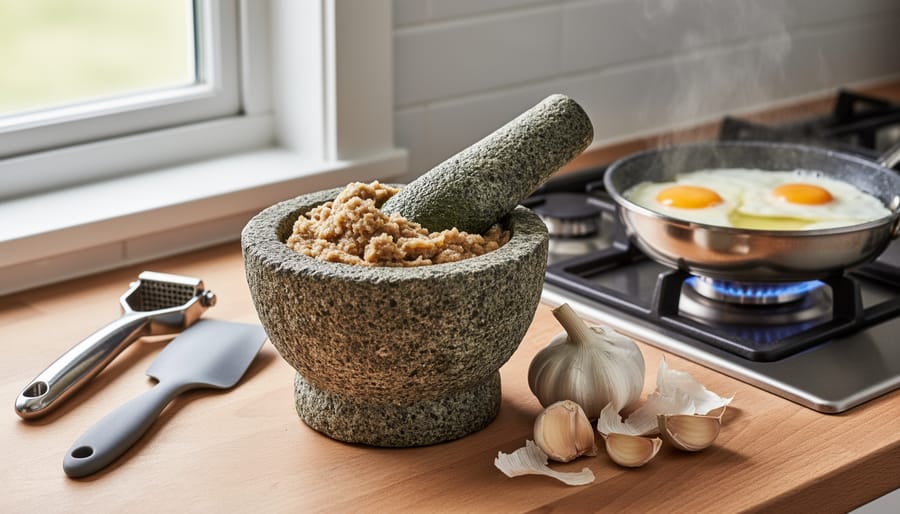
A traditional stone mortar and pestle transforms whole spices and fresh herbs in ways electric grinders can’t match. The grinding action crushes cell walls gradually, releasing aromatic oils without generating heat that can dissipate flavor. Thai cooks swear by heavy granite sets for curry pastes, while Italian kitchens favor marble versions for pesto.
The weight matters here. A substantial mortar (at least 2-3 pounds) stays put during vigorous grinding and provides the mass needed to properly crush peppercorns, cumin seeds, and fibrous ingredients like lemongrass. The rough interior surface creates friction that electric blades simply can’t replicate.
You control texture completely. Want coarsely cracked coriander for a spice rub? Grind for thirty seconds. Need silky-smooth garlic paste? Work it for three minutes. This precision is impossible with on-off buttons.
Cleaning is straightforward despite what you might fear. A quick rinse and scrub with rice or coarse salt removes residual oils between uses. The stone actually improves with age, developing a seasoned patina that adds character to your kitchen.
11. Offset Spatula
An offset spatula looks like a regular knife had a career change and decided to become a baker’s best friend. The blade sits about an inch below the handle, creating that signature angled bend that changes everything about how you frost cakes and handle delicate pastries.
The angle keeps your knuckles clear of the frosting while giving you incredible control over how much pressure you apply. Run it around a cake to create perfectly smooth sides, or use the flat blade to lift cookies off baking sheets without crumbling their edges. Bakers also love offset spatulas for spreading batter evenly in sheet pans and loosening brownies from corners without mangling them.
Most home bakers own one small offset spatula (around 4-6 inches) and find themselves reaching for it constantly, not just for desserts but for spreading preserves, flipping delicate fish, and even plating food with restaurant-style precision.
12. Dutch Poffertjes Pan
A Dutch poffertjes pan features 10-20 small round indentations, each about an inch across, designed specifically for making traditional Dutch mini pancakes. These fluffy, slightly sweet treats get their distinctive shape and texture from the pan’s cast iron construction, which distributes heat evenly for perfect browning. While poffertjes remain the pan’s primary purpose, it’s equally brilliant for Danish aebleskiver, Swedish plättar, or creative breakfast items like mini Dutch babies and egg bites. The specialized wells create perfectly portioned results that are impossible to achieve with regular pans. Cast iron versions require seasoning but last generations, while non-stick aluminum options offer easier maintenance. This pan transforms weekend brunch into an interactive cooking experience that delights both kids and adults.
13. Silicone Garlic Peeler Tube
This humble little tube might be the smallest investment with the biggest frustration-elimination payoff in your kitchen. Roll whole garlic cloves inside the soft silicone cylinder with gentle pressure, and the papery skins slip right off, no sticky fingers, no fingernails embedded with garlic smell, no wrestling with stubborn cloves. The secret lies in the textured interior that grabs skins while the garlic itself stays smooth enough to roll free. One tube costs less than a fancy coffee and lasts for years. I keep mine right beside my cutting board because I use it almost daily, and guests always ask where I got it when they see how effortlessly it works.
14. Adjustable Measuring Cup
Anyone who’s wrestled with scraping peanut butter or honey out of a traditional measuring cup knows the frustration, half your ingredient stays stuck inside, wasted and messy. An adjustable measuring cup solves this completely with its brilliant plunger design. You pull the plunger to your desired measurement, fill the cylinder with sticky ingredients, then push the plunger to eject everything cleanly into your bowl. No scraping, no waste, no sticky spoons.
This tool shines with shortening, tahini, molasses, corn syrup, coconut oil, and nut butters. The measurements are marked clearly on the side, and cleanup takes seconds under warm water. It’s inexpensive (usually under $15), dishwasher-safe, and eliminates one of baking’s most annoying tasks. Once you use one, standard measuring cups feel hopelessly outdated for anything thicker than water.
15. Splatter Screen
A splatter screen is one of those tools that seems almost too simple to matter until you use it once and wonder how you ever cooked without it. This fine mesh screen (usually 10-13 inches in diameter with a long handle) sits over your pan during frying, creating a barrier that catches hot oil droplets before they reach your stovetop, backsplash, or arms. What makes it genuinely useful is the mesh design that traps grease while letting steam escape, so your food still gets crispy instead of steaming under a solid lid. Canadian home cooks particularly appreciate splatter screens during long winters when frying bacon, pan-searing steaks, or cooking anything in hot oil becomes a weekly cleanup nightmare. They’re inexpensive (typically $10-20), take up minimal drawer space, and save you from scrubbing oil spatters off the stove after every meal.
Organizing Your Unique Kitchen Tools
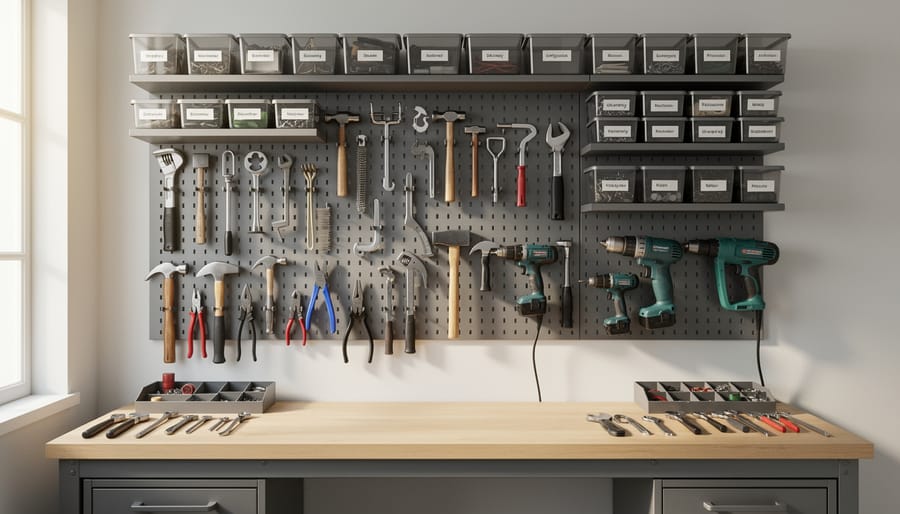
Having these specialized tools is wonderful, until they create drawer chaos or disappear into the back of cupboards. The key is setting up simple storage systems that keep your unique equipment accessible without overwhelming your kitchen.
Start by grouping tools based on how often you use them. Daily-use items like your fish spatula or bench scraper deserve prime real estate in your top drawer or on counter hooks. Weekly tools (mandoline, tortilla press) work well in mid-level cabinets, while seasonal equipment (raclette grill, poffertjes pan) can live higher up or in less accessible spots.
Here are smart storage solutions that work in real kitchens:
- Magnetic knife strips mounted inside cabinet doors for metal tools like bench scrapers and offset spatulas
- Adjustable drawer dividers to create dedicated slots for flat items like silicone mats and splatter screens
- S-hooks on a tension rod under the sink or inside pantry doors for spider strainers and other hanging tools
- Clear stackable bins labeled by cuisine type (Japanese, Mexican, baking) for grouping related specialty items
- Vertical file organizers stood on their side to store baking sheets, cutting boards, and thin pans upright
- Pegboard panels on empty wall space with adjustable hooks that adapt as your collection grows
Consider rotating tools seasonally. Keep your raclette grill accessible during winter entertaining months, then swap it for outdoor grilling tools when summer arrives. Store the mouli and mortar-pestle near your cooking zone during harvest season when you’re processing tomatoes and making sauces, then tuck them away when fresh produce season ends.
The best organization system is the one you’ll actually maintain, so keep it simple and adjust as your cooking habits evolve.
Making the Most of Specialized Equipment
The real value of unique cooking equipment shows up in your actual cooking, not sitting unused in a drawer. When you pick tools that match your cooking style, whether you’re deep-frying spring rolls weekly or experimenting with homemade pasta, you’ll reach for them naturally. Start with one or two pieces that solve problems you face often. That spider strainer becomes indispensable once you realize it pulls dumplings from broth without fishing around with chopsticks. The bench scraper transforms messy dough work into tidy precision.
Give each new tool a proper workout before deciding its fate. Use that tortilla press for a month of taco nights. Test your takoyaki pan beyond the novelty first try. Some tools surprise you by fitting into routines you didn’t expect, while others reveal themselves as special-occasion pieces worth keeping anyway.
The best kitchen tools aren’t the ones that cost the most or look the coolest on social media. They’re the ones that actually make cooking more enjoyable for you. If a specialized piece helps you cook dishes you love more easily, saves cleanup time, or simply makes you excited to get in the kitchen, it’s earned its spot. Quality matters, but so does frequency of use. A well-made $30 fish spatula you grab daily beats a $200 gadget collecting dust.
Common Questions About Unique Cooking Equipment
Where can I find unique cooking equipment in Canada?
Most specialty kitchen stores like Nella Cutlery, Williams Sonoma, and regional cookware shops carry unique tools, while online retailers like and Chef’s Emporium offer wider selection with home delivery. Ethnic grocery stores and markets are excellent sources for culture-specific equipment like spider strainers, tortilla presses, and mortar and pestles at competitive prices.
Do I really need specialized cooking equipment?
You don’t need every tool, but the right specialized equipment makes specific tasks significantly easier and produces better results than improvising with general tools. Start with one or two items that match your cooking style, whether that’s a fish spatula for your weekend brunches or a mandoline if you cook Asian food regularly.
How should I store tools I only use occasionally?
Keep frequently used specialty tools in accessible drawers with dividers, and store seasonal or occasional items in labeled bins on higher shelves or in a pantry closet. Hanging racks work beautifully for flat items like bench scrapers and offset spatulas, while nesting similar-sized tools inside each other maximizes vertical space.
Are expensive versions of these tools worth the investment?
Quality matters more than price, but expensive doesn’t always mean better. For items like spider strainers and garlic peelers, mid-range options perform just as well as premium versions, while tools like Japanese mandolines and cast iron specialty pans benefit from higher-quality construction that lasts decades.
How do I learn to use unfamiliar equipment?
YouTube tutorials and the manufacturer’s website usually offer detailed demonstrations, while cooking forums and Reddit communities provide real-world tips from experienced users. Start with simple recipes designed for beginners, practice with inexpensive ingredients until you’re comfortable, and don’t hesitate to reach out in the comments here with specific questions.
The beauty of adding unique cooking equipment to your kitchen is that each tool opens up new possibilities without requiring a complete overhaul of how you cook. You’ll quickly discover which pieces earn permanent spots in your everyday rotation and which ones come out for special occasions or specific recipes. The investment pays off not just in better cooking results, but in the confidence and enjoyment that comes from having exactly the right tool for the job.