
 joyce
joyce Yes, you can still pay cash for food delivery in Canada in 2026. Both Uber Eats and DoorDash now offer cash-on-delivery options across the country, with Uber Eats officially rolling out the payment method starting July 1, 2026. Other platforms like Chefz have also added cash to their payment options, giving you more flexibility when ordering your next meal.
The process is straightforward: you pay your driver directly at the door, including the full order amount plus any tip you’d like to add. Behind the scenes, the platform deducts what you paid from the driver’s next earnings deposit, so everything stays balanced. Keep in mind that not every driver has opted in to accept cash orders, so availability can vary depending on your location and time of day.
If you live in Toronto or around the GTA, you’ll find cash payments still possible, though they’re becoming less common than digital options. Many local restaurants and smaller regional delivery services continue to welcome cash at pickup or delivery, which can be a lifesaver when you’re managing a strict budget, don’t have access to a credit card, or simply prefer keeping your transactions offline.
This shift matters for anyone who needs practical alternatives to card payments, whether that’s helping a family member without digital banking, staying on top of spending, or maintaining privacy. The good news? Finding a service that accepts cash is easier now than it’s been in years, and we’ll walk you through exactly which platforms work, how the payment process unfolds, and where to look for local options that still happily take bills and coins.
The Current State of Cash Payments for Food Delivery in 2026
The food delivery landscape has shifted dramatically over the past few years, with most platforms pushing customers toward credit cards, debit cards, and digital wallets. But cash hasn’t disappeared entirely. In July 2026, Uber Eats introduced cash-on-delivery as an official payment option across Canada, marking a significant reversal after years of card-only policies. DoorDash has also rolled out cash acceptance in Canadian markets, giving customers two major platforms where paying with physical currency is once again an option.
Here’s the catch: cash availability isn’t universal or guaranteed. Both Uber Eats and DoorDash rely on individual drivers to opt in to accepting cash orders. If no drivers in your area have chosen to take cash, you won’t see it as a payment option in the app. This driver-dependent system means cash-on-delivery works best in densely populated areas where there are enough participating couriers. In Toronto and throughout the GTA, paying cash still possible in 2026, though it’s admittedly less common and more selective than it was a few years ago.
Smaller platforms and regional apps have been quicker to embrace cash. Chefz, for example, lists cash-on-delivery alongside its digital payment methods without the same driver opt-in hurdles. Many independent restaurants and local delivery services around the GTA never stopped accepting cash in the first place, especially for pickup orders or when you call them directly.
The bottom line? Cash isn’t the default anymore, but it hasn’t vanished. You’ll need to check each app and be prepared for the possibility that it’s not available for every order or in every neighbourhood. The platforms that do accept it typically follow the same process: you pay the driver at your door, including the tip, and the platform deducts the order total from the driver’s next earnings deposit.
Major Delivery Apps That Accept Cash in Canada
Uber Eats Cash on Delivery
Uber Eats rolled out cash-on-delivery across Canada in July 2026, marking a significant shift for the platform. If you’re wondering whether you can hand your driver cash instead of pulling out a credit card, the answer is yes, but with a catch.
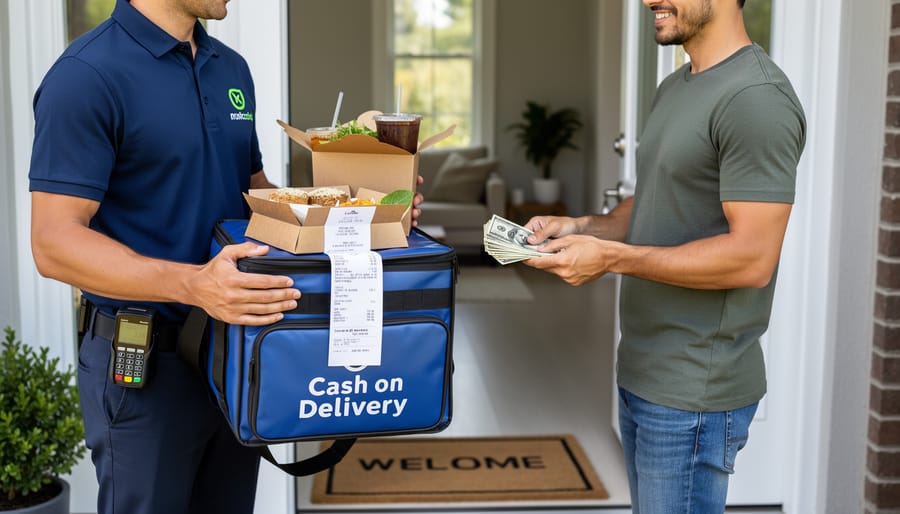
Here’s how it works: When you place an order through the Uber Eats app, you’ll see cash as a payment option if it’s available in your area. You pay the driver directly at your door, and that includes the full order total plus any tip you want to add. The driver then has that amount deducted from their next earnings deposit with Uber Eats, so you’re essentially prepaying them for work they’ve already completed for you.
The tricky part? Not every driver accepts cash orders. Drivers opt in to this feature individually, which means availability varies depending on who’s delivering in your neighborhood at any given time. In busier areas like Toronto and the GTA, you’ll likely find drivers who accept cash more easily than in smaller communities. If cash payment doesn’t appear as an option when you’re ordering, it simply means no drivers nearby have opted in at that moment. You might have better luck trying during peak meal times when more drivers are active.
DoorDash Cash Payments
DoorDash operates a cash-on-delivery option in Canada that works almost identically to Uber Eats cash opt-in system. When you place an order, you’ll see a cash payment option at checkout if drivers in your area have agreed to accept cash. Not every driver participates, so availability varies by neighborhood and time of day.
The transaction is straightforward: you hand cash to the driver when your food arrives, covering both the order total and your tip. DoorDash then deducts what you paid from the driver’s next earnings deposit, keeping the platform’s fee structure intact behind the scenes.
Here’s the catch: you can’t know in advance which specific driver will take your order, so there’s no way to guarantee a cash-accepting driver every time. Your best strategy is to check the payment options screen during peak hours (lunch and dinner rushes) when more drivers are active. If cash isn’t listed, drivers in your area at that moment aren’t accepting it.
Some users report better luck sticking to the same delivery zones and ordering at consistent times, gradually learning when cash drivers tend to be available. If you frequently need to pay cash, consider keeping the app open and checking throughout the day to spot patterns in your neighborhood.
Chefz and Other Regional Apps
Beyond the major platforms, several smaller delivery services have quietly maintained cash as a standard payment option. Chefz is a great example, this app lists cash on delivery right alongside credit cards and digital wallets, treating it as just another way to pay rather than a special accommodation. You won’t need to hunt through settings or wonder if your driver will accept it. The app makes it clear upfront.
Regional and neighborhood-focused delivery apps often follow a similar approach. These platforms typically serve specific cities or communities, and they understand that local customers have varied payment preferences. Some cater to areas with large immigrant populations where cash remains the norm. Others simply recognize that convenience means offering choices.
The best way to discover these options? Search your app store for food delivery services specific to your city or region. Read the payment method descriptions carefully before downloading. You can also ask neighbors in local Facebook groups or community forums which delivery apps they use when they want to pay cash. Toronto, Vancouver, and Montreal residents often have two or three lesser-known options beyond the big names, and many accept cash without fuss.
How Cash-on-Delivery Actually Works
When you select cash as your payment method on a platform like Uber Eats or DoorDash, the transaction is surprisingly straightforward, but a bit of preparation helps everything go smoothly.
Here’s how the process unfolds from start to finish:
- Place your order through the app or website as usual, selecting “cash on delivery” or “pay with cash” as your payment method during checkout.
- Note the total amount displayed, including your food, delivery fee, service charges, and any tip you’ve added (you can tip in cash instead if you prefer).
- Prepare the exact amount or slightly more before the driver arrives, keeping small bills handy since drivers may not carry much change.
- When the driver knocks or rings, greet them with your cash ready and hand over the payment, saying thank you if they’re providing change.
- Collect your food, verify your order quickly if you’d like, and the transaction is complete.
Behind the scenes, the platform deducts the order total from the driver’s next earnings deposit, so the driver isn’t fronting the money for your meal. This system protects drivers while still offering you the flexibility of cash payment.
One practical tip: if you want to leave a cash tip but didn’t include it in your app total, have it ready separately and hand it directly to the driver. Many customers find this more personal than app-based tipping, and drivers appreciate the immediate gesture. Just communicate clearly which bills are for the order and which are the tip to avoid confusion.
Remember, not every driver in your area has opted in to accept cash orders, so if you don’t see the cash option at checkout or experience longer wait times, that’s likely why. The system works well when drivers are available, making cash delivery a viable choice when you need it.
Local Restaurants and Regional Services That Welcome Cash
While the major delivery apps have moved toward digital payments, independent restaurants and smaller delivery services often buck that trend. Many local spots around the GTA and across Canada still welcome cash, you just need to know where to look.
Your neighborhood Chinese takeout, family-run pizza place, or that shawarma shop you’ve been ordering from for years? There’s a good chance they still accept cash for both pickup and delivery. These restaurants often use their own drivers or work with small regional delivery services that aren’t bound by the same payment restrictions as the big platforms.
The best approach is surprisingly old-school: call them directly. A quick phone call lets you confirm their payment options, place your order, and often get better prices since they’re not paying platform commissions. You’ll also get to ask about minimum orders, delivery areas, and expected wait times.
Regional delivery services that serve specific neighborhoods or ethnic communities are another cash-friendly option. These smaller operations understand their customers’ needs and often cater to communities where cash remains a preferred payment method. They might not have fancy apps, but they deliver reliably and accept the payment methods that work for you.
Don’t overlook restaurant websites either. Some establishments have added their own online ordering systems that offer more payment flexibility than you’d find on third-party apps. The cash option might not be prominently advertised, but it’s often there if you look, or ask.
Why Cash Options Matter for Canadian Families
Cash payment options aren’t just a convenience, for many Canadian families, they’re a practical necessity. Understanding why cash still matters helps explain why services that accept it remain valuable.
Budget management tops the list. Paying with physical money makes it easier to track spending and stick to a food budget. When you hand over bills, you see exactly what’s gone, unlike a digital payment that disappears into your statement. Families watching their grocery and takeout expenses often find that cash keeps them more accountable than tapping a card.
Privacy concerns also drive some Canadians toward cash. Not everyone wants their meal choices tracked, analyzed, and potentially sold as consumer data. Cash transactions leave no digital footprint, which matters to people who value control over their personal information. This same preference often extends to grocery delivery apps where some shoppers seek cash-friendly options for similar reasons.
Banking access remains uneven. Some families lack credit cards by choice or circumstance. Others face temporary banking issues, a frozen account, a lost card, or simply being between paychecks. Cash provides a backup when digital payments aren’t an option.
Helping others is another common scenario. Adult children order delivery for elderly parents who may not use smartphones or credit cards comfortably. Gifting a meal to a friend facing hardship works better with cash payment when sharing login credentials isn’t practical.
Emergency situations highlight cash’s resilience. When online payment systems go down or cards fail unexpectedly, cash-on-delivery keeps dinner arriving.
What to Do When Cash Isn’t Available
When your preferred restaurant or platform doesn’t accept cash, you still have options that keep you in control of your spending without needing a traditional credit card.
Alternative Payment Methods:
- Prepaid Visa or Mastercard gift cards work like credit cards on any food delivery app
- Reloadable prepaid cards let you set a specific budget and top up as needed
- Ask a family member or roommate to place the order on their account, then reimburse them with cash
- Choose pickup instead of delivery, many restaurants accept cash at the counter even if their delivery partners don’t
Prepaid cards are available at most grocery stores and pharmacies across Canada, and they’re perfect for budget-conscious households. You load exactly what you want to spend, avoiding overdrafts or surprise charges.
If you’re helping an elderly parent or relative who prefers cash, consider setting up a shared delivery account they can request orders through. You handle the digital payment, they reimburse you in cash. This arrangement works especially well when combined with planning ahead, much like how you’d organize your kitchen or follow recipe testing tips to make cooking smoother.
The pickup option deserves special mention. Most restaurants welcome cash for takeout orders, even if their third-party delivery doesn’t support it. You get the same food, often without delivery fees, and you can pay the way you prefer.
Cash-on-delivery hasn’t disappeared, it’s just become more selective. Whether you’re managing a budget, helping a family member without a credit card, or simply prefer handing over bills at your door, these options are still out there and worth tracking down. Check your local restaurants directly, explore which drivers in your area accept cash on the major apps, and don’t hesitate to ask. Have you found a great cash-friendly delivery service in your neighborhood? Drop a comment below or reach out, we’d love to hear what’s working for you.