 joyce
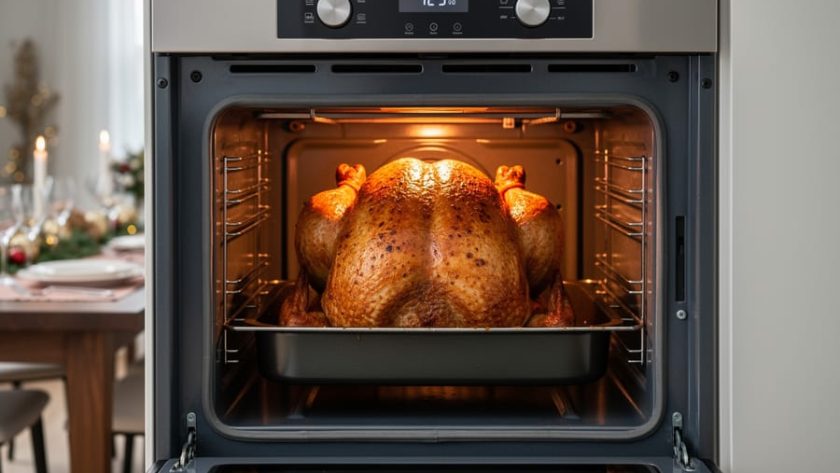
Cooking a whole turkey in the oven means roasting it at 325°F (163°C) until the internal temperature reaches 170°F (77°C) for an unstuffed bird or 180°F (82°C) for a stuffed one, measured in the thickest part of the thigh. This method delivers juicy, golden-brown results perfect for holiday gatherings and special occasions, with cooking times ranging from about 3 to 5 hours depending on the size of your bird.
If you’ve never roasted a turkey before, the process might feel intimidating, but it’s surprisingly straightforward once you understand the basics. The key is managing temperature and time correctly while following food safety guidelines from Health Canada to ensure your turkey is both delicious and safe to serve. Most Canadian home cooks face the same challenges: worrying about dry breast meat, wondering if the bird is fully cooked, and timing everything so dinner lands on the table when guests arrive.
This guide walks you through the complete process, from thawing and prep work to final temperature checks. We’ve tested these methods in real Canadian kitchens and gathered feedback from readers who’ve successfully roasted turkeys using these exact techniques. Whether you’re cooking your first Thanksgiving turkey or looking to refine your approach, you’ll find reliable, tested instructions that take the guesswork out of the process and help you serve a bird you’re proud of.
What You’ll Need to Roast a Turkey
Before you start roasting, gather the roasting tools and ingredients you’ll need. Having everything ready makes the process smoother and helps you stay organized, especially if this is your first time cooking a whole turkey.
- A whole turkey, fresh or fully thawed
- Roasting pan with a rack to elevate the bird and allow heat circulation
- Meat thermometer for checking internal temperature accurately
- Aluminum foil for tenting if the turkey browns too quickly
- Paper towels for patting the turkey dry
- Salt, pepper, and your choice of herbs or seasonings
- Butter or oil for basting and adding flavor
- Kitchen twine if you plan to truss the legs
The meat thermometer is your most important tool here. Health Canada recommends cleaning your food thermometer in warm, soapy water before each use to prevent cross-contamination. Choose a reliable instant-read or oven-safe model that can accurately measure the thickest part of the meat without touching bone.
Make sure your roasting pan is large enough to hold the turkey comfortably with space around it. The rack keeps the bottom from getting soggy and promotes even browning. Having the right kitchen tools makes a real difference in your results and confidence.
Safety First: What to Know Before You Start
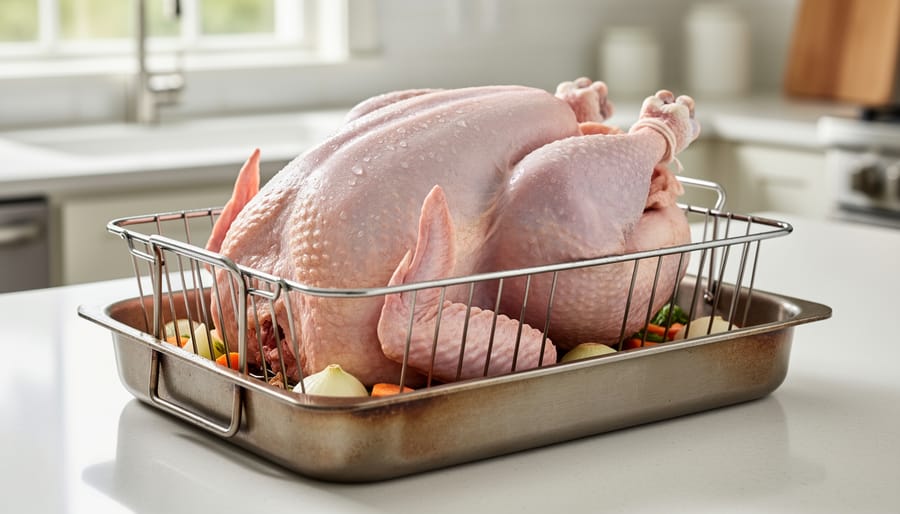
Before you begin roasting, a few safety steps will protect you and everyone at your table. Proper thawing, careful handling, and using a clean thermometer are essential for a safe, delicious turkey.
If you’re working with a frozen bird, plan ahead. The safest method is to thaw poultry in the fridge allowing roughly 24 hours for every 5 pounds. Never thaw turkey on the counter, as bacteria multiply rapidly at room temperature.
Once your turkey is thawed, handle it with care. Wash your hands thoroughly before and after touching raw poultry. Keep the turkey separate from ready-to-eat foods, and clean any surfaces, cutting boards, or utensils that come into contact with raw meat using hot, soapy water.
Your meat thermometer is your most important tool for both safety and quality. Beyond cleaning it before use, insert it through the thickest part of the meat without touching bone to get an accurate reading. This simple habit ensures you’re measuring actual meat temperature, not the heat from a bone, and helps you avoid undercooking.
These steps might seem basic, but they’re the foundation of safe turkey roasting. Get them right, and you can focus on the fun part: enjoying a perfectly cooked meal with the people you care about.
Step-by-Step: Roasting Your Turkey to Perfection
Preparing the Turkey
Start by reaching into the turkey’s cavity, you’ll find a small packet of giblets (the neck, heart, liver, and gizzard) tucked inside. Pull these out along with the neck, which is sometimes in the neck cavity. Save them for gravy if you like, or discard them.
Next, pat the turkey completely dry inside and out with paper towels. This step matters more than you might think: a dry surface helps the skin crisp up beautifully during roasting instead of steaming. Don’t skip it.
For seasoning, keep it simple or go bold, it’s your call. A classic approach is rubbing softened butter or oil over the skin and sprinkling generously with salt and pepper. You can tuck fresh herbs like thyme or rosemary under the skin, or rub a spice blend over the outside. Season the cavity too with salt, pepper, and aromatics like quartered onion, lemon, or garlic if you want extra flavour.
Position the turkey breast-side up on the roasting rack in your pan. Make sure it sits securely and the legs point toward the back of the oven. Tuck the wing tips under the body to prevent burning, and if you have kitchen twine, loosely tie the legs together to help the bird cook evenly. You’re now ready to roast.
Setting Up Your Oven
Position your oven rack in the lower third of the oven before preheating. This placement gives the turkey enough clearance and promotes even browning without the top getting too dark too quickly. Remove any racks above to prevent crowding.
Preheat your oven to 325°F (163°C). Canadian standards require you to roast at 325°F or higher for food safety, and this moderate temperature works well for evenly cooking a whole turkey without drying out the breast meat. Don’t rush with a higher temperature unless you’re comfortable managing faster cooking times and increased monitoring.
Make sure your oven is fully preheated before the turkey goes in, this ensures consistent heat from the start.
Roasting and Monitoring
Once your turkey is in the oven at 325°F (163°C), the waiting game begins. Turkey cooking time depends primarily on the bird’s weight. As a general guideline, plan for approximately 15 to 20 minutes per pound for an unstuffed turkey. A 12-pound bird will take roughly 3 to 4 hours, while a 20-pounder might need 4.5 to 5 hours or more.
Basting isn’t essential for a moist turkey, but if you enjoy the ritual and want deeper colour on the skin, you can baste every 45 minutes to an hour. Just work quickly to avoid significant heat loss each time you open the oven door.
Start checking the internal temperature about an hour before you expect the turkey to be done. This gives you a buffer if it’s cooking faster than anticipated. Insert your food thermometer through the thickest part of the thigh, pushing it all the way to the middle without touching bone. You’re looking for 170°F (77°C) for an unstuffed turkey or 180°F (82°C) if it’s stuffed, according to Canadian Turkey guidance. Remember to clean your thermometer in warm, soapy water before use.
If the breast is browning too quickly while the thighs lag behind, tent loosely with foil to slow the darkening without stopping the cooking process.
Checking for Doneness
The most reliable way to know your turkey is fully cooked is checking the internal temperature with a meat thermometer. Insert the thermometer through the thickest part of the thigh, pushing it all the way to the middle without letting it touch bone (bone conducts heat differently and will give you a false reading). For an unstuffed turkey, you’re looking for 170°F (77°C). If you’ve stuffed your bird, the target is 180°F (82°C) to ensure the stuffing reaches a safe temperature. Toronto Public Health recommends 82°C for a whole turkey as the safe benchmark.
Check the temperature in a couple of spots, the thickest part of the breast and both thighs, to make sure the entire bird has reached the safe zone. If one area is lagging, give it more time and check again in 15 to 20 minutes. Don’t rely on pop-up timers alone; they’re not always accurate. Your thermometer is your best friend here.
Once the turkey hits the right temperature in all the key spots, it’s done. Pull it from the oven and let it rest before carving so the juices can redistribute throughout the meat.
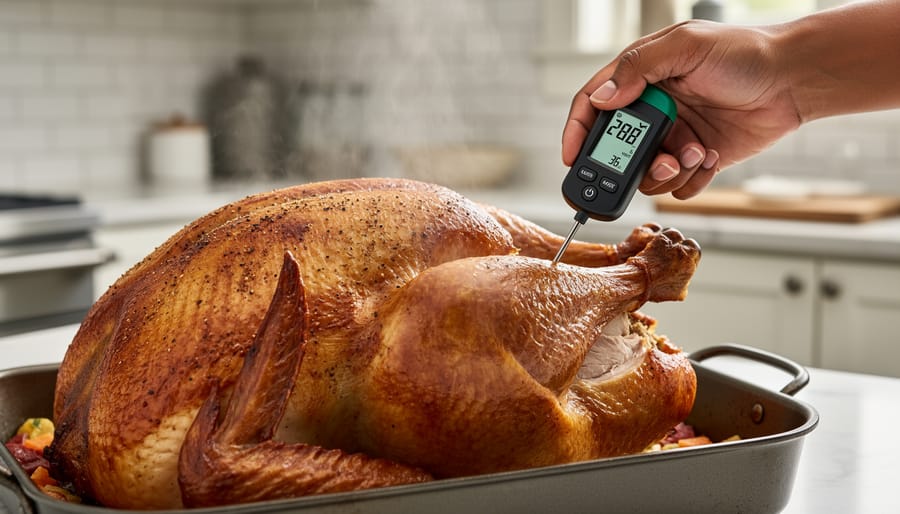
How to Tell Your Turkey is Done (and What to Do Next)
While the meat thermometer gives you the definitive answer, 170°F (77°C) for unstuffed turkey or 180°F (82°C) for stuffed, according to Canadian Turkey, your eyes and hands offer backup confirmation. Pierce the thickest part of the thigh with a fork or knife tip; the juices should run clear, not pink or cloudy. A properly cooked turkey also shows some give when you gently wiggle the drumstick in its socket, though it won’t fall off completely.
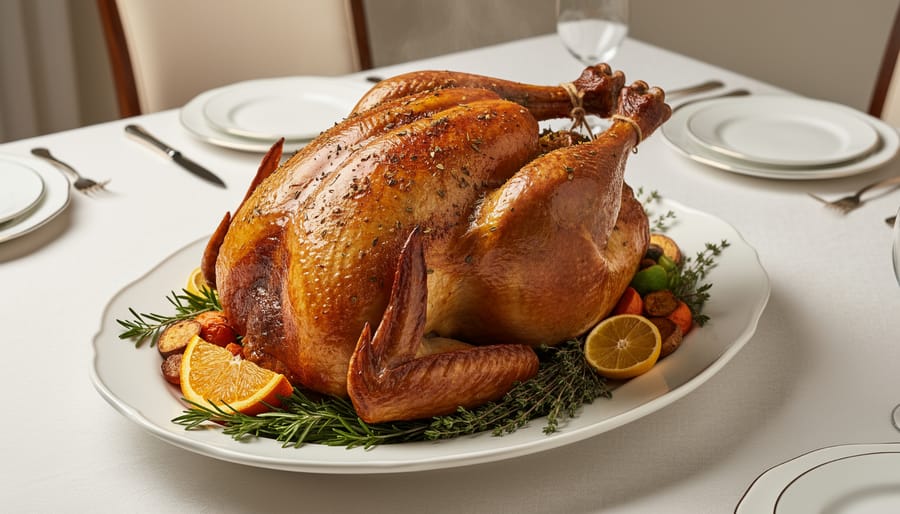
Once you’ve confirmed doneness, carefully transfer the turkey to a cutting board or serving platter using sturdy tongs or two large spatulas, it’s heavy and the pan is scorching hot, so move slowly. Tent the bird loosely with aluminum foil while you make gravy or finish side dishes. This standing time lets the meat fibres relax and the juices redistribute, making carving easier and keeping the meat moist on the plate. Don’t skip this pause; slicing immediately causes all those precious juices to pool on the board instead of staying in the meat.
Turkey Roasting at a Glance
Here’s a handy reference table to guide you through roasting your turkey. These times are approximations for an unstuffed turkey roasted at 325°F (163°C), so always use your meat thermometer to confirm doneness rather than relying on the clock alone.
| Turkey Weight | Approximate Cooking Time | Target Internal Temperature |
|—————|————————-|—————————-|
| 6-8 lbs | 2.5-3 hours | 170°F (77°C) |
| 8-12 lbs | 3-3.5 hours | 170°F (77°C) |
| 12-16 lbs | 3.5-4 hours | 170°F (77°C) |
| 16-20 lbs | 4-4.5 hours | 170°F (77°C) |
| 20-24 lbs | 4.5-5 hours | 170°F (77°C) |
If you’re roasting a stuffed turkey, add about 30 minutes to these estimates and check that the stuffing itself reaches 165°F (74°C). For a completely different approach when time is tight, you can cook from frozen with certain turkey breast cuts, though whole turkeys must be fully thawed first for even cooking and safety.
Common Questions About Cooking Turkey in the Oven
Cooking a whole turkey can raise a lot of questions, especially if you’re doing it for the first time. Here are answers to the most common concerns we hear from readers.
Does a stuffed turkey take longer to cook than an unstuffed one?
Yes, stuffed turkeys need more time to ensure the stuffing reaches a safe temperature. Canadian Turkey recommends cooking an unstuffed turkey to 170°F (77°C), while a stuffed turkey should reach 180°F (82°C).
What should I do if my turkey is browning too fast?
Tent the turkey loosely with aluminum foil to slow down the browning while the interior continues cooking. You can remove the foil during the last 30 minutes if you want the skin to crisp up again.
Why did my turkey turn out dry?
Dry turkey usually means it was overcooked. Using a meat thermometer is the best way to avoid this, pull the turkey from the oven as soon as it hits the proper internal temperature, not when the timer goes off.
Why do different sources give different temperature targets?
You’ll see variations because some sources prioritize maximum safety margins while others balance safety with texture. Toronto Public Health recommends 82°C for whole turkey, while Canadian Turkey specifies 170°F (77°C) for unstuffed birds, both are safe, with the higher temperature providing extra assurance.
These questions come up year after year, so you’re definitely not alone if you’ve wondered about them. The good news is that once you understand the basics of temperature monitoring and timing, most turkey troubles become easy to avoid.
You can absolutely nail cooking a turkey in the oven. Remember the essentials: preheat to 325°F (163°C) or higher, use a clean meat thermometer every time, and check that the internal temperature hits at least 170°F (77°C) for unstuffed birds or 82°C per Toronto Public Health guidelines. These steps aren’t complicated, they’re your roadmap to a delicious, safe meal.
We’d love to hear how your turkey turned out! Drop a comment below with your experience, any tweaks you made, or questions that came up while cooking.