 joyce
joyce Making delicious Asian dumplings at home takes just 40 minutes from start to finish, and you only need basic ingredients and simple folding techniques that anyone can master on their first try. Whether you’re craving steamed, pan-fried, or boiled dumplings, the process comes down to three straightforward steps: mixing a savory filling, pleating the wrappers (even basic half-moon shapes work perfectly), and cooking them using your preferred method.
The beauty of homemade dumplings lies in their forgiving nature. Unlike some recipes that demand precision, dumplings welcome your personal touch. If your pleats aren’t picture-perfect, they’ll still taste incredible. The filling is flexible too: ground pork mixed with cabbage, ginger, and green onions forms the classic base, but you can swap in chicken, shrimp, or vegetables based on what’s in your fridge.
I’ve tested this recipe dozens of times in my own kitchen, tweaking ratios and techniques until I found the combination that delivers restaurant-quality results without any intimidation factor. The secret isn’t in complicated steps or hard-to-find ingredients. It’s about understanding a few key principles: keeping your filling moist but not wet, sealing the edges properly so they don’t burst during cooking, and knowing exactly when they’re done.
This guide walks you through every detail, from gathering your tools to checking that satisfying moment when your dumplings are perfectly cooked and ready to enjoy.
What You’ll Need for Easy Asian Dumplings
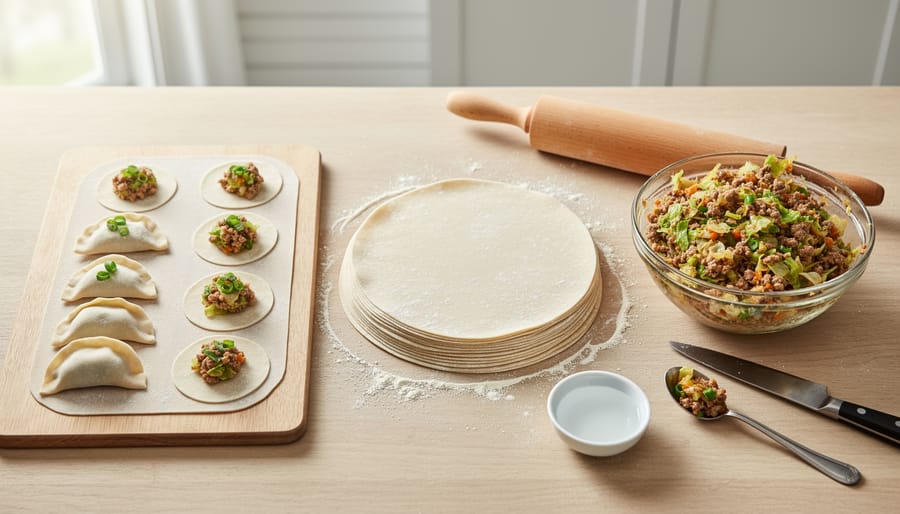
Making dumplings at home is easier than you might think once you have the right ingredients and tools on hand. You don’t need specialty equipment or hard-to-find items, most of what you’ll need is probably already in your kitchen.
Dumpling Wrappers
Store-bought wrappers are your best friend for easy dumplings. Look for round dumpling wrappers (also called gyoza or potsticker wrappers) in the refrigerated or frozen section of Asian grocery stores or well-stocked supermarkets. They’re thin, pliable, and ready to use. If you can’t find round wrappers, square wonton wrappers work too, though you’ll need to trim them into circles. Making wrappers from scratch is an option, but it adds time and complexity that defeats the “easy” part of this recipe.
Filling Ingredients
For a classic pork filling, you’ll need ground pork (preferably with some fat content for juiciness), napa cabbage or bok choy, fresh ginger, garlic, and green onions. If you prefer chicken, ground chicken or turkey works well. Vegetarian options include finely chopped mushrooms, tofu, cabbage, carrots, and edamame. Essential seasonings include soy sauce, sesame oil, a pinch of sugar, and white pepper. Cornstarch helps bind the filling and absorb excess moisture.
Essential Equipment
The basic dumpling cooking equipment you’ll need includes:
- Large mixing bowl for preparing the filling
- Sharp knife and cutting board for chopping vegetables and aromatics
- Small bowl of water for sealing dumpling edges
- Large plate or baking sheet lined with parchment paper for holding assembled dumplings
- Steamer basket (bamboo or metal), large skillet with lid, or large pot for boiling, depending on your chosen cooking method
- Wooden spoon or spatula for mixing and cooking
A clean kitchen towel is helpful for covering assembled dumplings while you work, preventing the wrappers from drying out. If you’re pan-frying, a non-stick or well-seasoned skillet makes the process much smoother.
Preparing Your Dumpling Filling
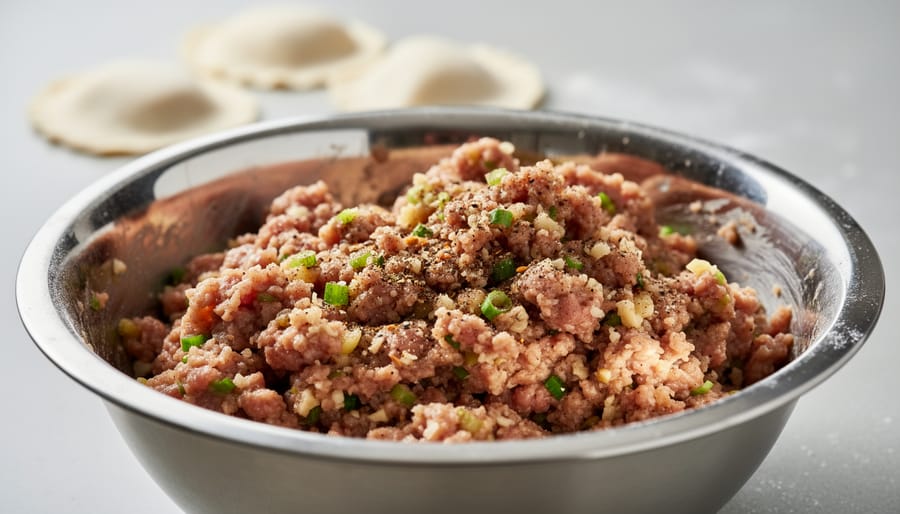
The filling is where your dumplings get their flavor, and getting it right is simpler than you might think. Start with about one pound of ground protein, pork is traditional and fatty enough to stay juicy, but ground chicken or turkey works too. If you’re going vegetarian, finely chopped mushrooms, cabbage, and carrots make an excellent base.
Chop your vegetables small and consistent. Aim for about one cup total of finely minced napa cabbage or regular cabbage, squeezed dry in a clean kitchen towel to remove excess moisture. Wet filling leads to soggy, torn wrappers. Add a quarter cup of minced green onions, one tablespoon of fresh grated ginger, and two cloves of minced garlic. These aromatics give dumplings their signature savory depth.
For seasoning, mix in two tablespoons of soy sauce, one tablespoon of sesame oil, a teaspoon of sugar, and a pinch of white pepper. The sesame oil adds richness, while the sugar balances the salt and brings out the other flavors. Stir everything together in one direction for about a minute. This develops the texture and helps the filling hold together when cooked.
The finished filling should be moist but not watery, sticky enough to cling together, and well-distributed without streaks of seasoning. If it feels too dry, add a tablespoon of water or chicken stock. Too wet? Mix in a tablespoon of cornstarch or breadcrumbs. Once you’re happy with the flavor and texture, you’re ready to start filling your wrappers.
How to Fold and Seal Dumplings (Easy Techniques)
Folding dumplings might seem intimidating at first, but the truth is you don’t need fancy pleats to make delicious dumplings. Two simple techniques will get you started, and both create a secure seal that keeps your filling where it belongs.
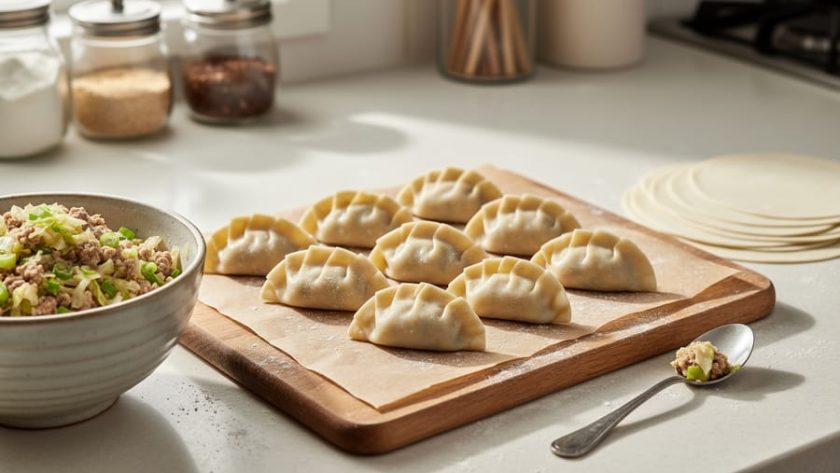
The half-moon fold is the easiest method and perfect for beginners. Place about a tablespoon of filling in the center of your wrapper. Dip your finger in water and run it along the entire edge of the wrapper, this moisture is what creates the seal. Fold the wrapper in half to form a half-moon shape, pressing the edges together firmly. Start at one end and work your way across, squeezing out any air pockets as you go. Press hard enough that the edges stick together completely, but not so hard that you tear the wrapper.
For a slightly fancier look, try the basic pleated fold. Start the same way: filling in the center, wet edges. Hold the wrapper in one hand and fold it in half, but this time, pinch the center point together first. On one side of that center pinch, make two or three small folds (pleats), pressing each one against the flat back side of the wrapper. Repeat on the other side. Your pleats don’t need to be uniform or perfect, they just add a bit of texture and help the dumpling sit upright.
- Place filling in wrapper center, leaving edges clear
- Wet edges with water using your fingertip
- Fold wrapper in half (half-moon) or pinch center point first (pleated)
- Press edges together firmly, squeezing out air
- For pleated style, create 2-3 small folds on each side
- Check the seal by gently pressing, no gaps should open
The key to leak-proof dumplings is a tight seal, not perfect pleats. If you’re new to dumpling-making, check out these dim sum making tips for additional techniques that make the process even smoother. Press the edges together firmly, and if a dumpling opens slightly, just wet and re-seal that spot. With a dozen or so dumplings under your belt, the motion becomes automatic.
Cooking Your Dumplings: Three Simple Methods
Steaming Dumplings
Set up your steamer basket over a pot of boiling water, making sure the water level sits about an inch below the basket, you don’t want the dumplings touching the water directly. Line the steamer with parchment paper, cabbage leaves, or lightly oiled cheesecloth to prevent sticking. If using parchment, poke a few holes in it so steam can circulate freely.
Arrange your dumplings in the basket with about half an inch of space between them, they’ll expand slightly as they cook. Place the lid on tightly and steam for 8-10 minutes over medium-high heat. Don’t peek during cooking, as releasing steam extends the cooking time.
Your dumplings are done when the wrappers turn translucent and slightly glossy, with no raw doughy patches visible. The filling should feel firm to the touch. If you’re using a meat filling, the internal temperature should reach 165°F. Let them rest in the steamer for one minute after turning off the heat, this makes them easier to remove without tearing.
Pan-Frying (Potstickers)
Heat 1-2 tablespoons of neutral oil in a non-stick skillet over medium-high heat. Arrange your dumplings flat-side down in the pan, leaving a bit of space between each one so they don’t steam together. Let them sizzle undisturbed for 2-3 minutes until the bottoms turn golden-brown and crispy.
Once you see that lovely crust forming, carefully add about ¼ cup of water to the pan (it will splatter, so pour from the side, not directly over the dumplings). Immediately cover with a lid to trap the steam. The water creates steam that cooks the tops and filling while the bottoms stay crisp. Let them steam for 4-5 minutes, or until the water has mostly evaporated.
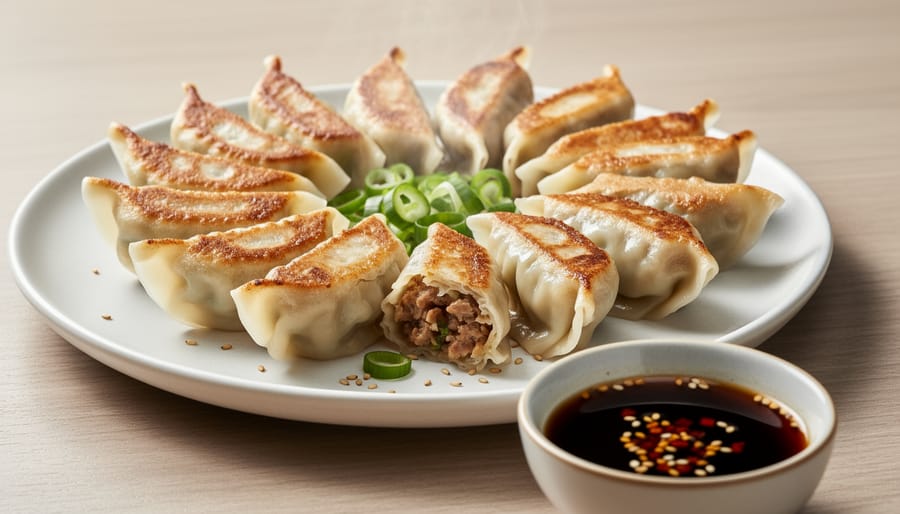
Remove the lid and let any remaining water cook off completely. The dumplings should release easily from the pan when they’re ready, if they stick, give them another 30 seconds. You’ll know they’re done when the bottoms are deeply golden and crispy, the wrappers look slightly translucent on top, and they slide freely in the pan. Transfer them crispy-side up to a plate and serve immediately while they’re hot and crunchy.
Boiling Dumplings
Boiling is one of the most forgiving ways to cook dumplings, perfect for beginners. Start by bringing a large pot of water to a rolling boil, you need plenty of water so the dumplings can move freely without crowding or sticking to the bottom.
Gently lower each dumpling into the boiling water using a slotted spoon. Don’t drop them from a height or they might break. Add them one at a time if you’re new to this, spacing them out to prevent sticking. Once all dumplings are in, give the water a gentle stir with a wooden spoon to keep them from settling on the pot bottom.
The water temperature will drop when you add the dumplings. Let it return to a gentle boil, then reduce heat slightly to maintain a steady simmer. Boiling too vigorously can cause dumplings to bump into each other and tear.
Fresh dumplings typically take 6-8 minutes; frozen ones need 8-10 minutes. The most reliable sign they’re done is the float test: when dumplings rise to the surface and bob there, they’re ready. Let them float for about one minute to ensure the filling is cooked through, then remove them with a slotted spoon and serve immediately.
Safety Tips and Common Mistakes to Avoid
Working with raw ingredients and hot cooking surfaces requires attention to a few basic precautions. Always wash your hands thoroughly before and after handling raw meat, and keep your filling ingredients refrigerated until you’re ready to assemble. If you’re using pork, chicken, or other proteins, make sure your cooked dumplings reach an internal temperature of 75°C (165°F) to ensure they’re safe to eat, you can check with an instant-read thermometer inserted into the filling.
Common beginner mistakes can derail even the simplest dumpling session. Overfilling is the most frequent culprit: too much filling stretches the wrapper thin, making it prone to tearing and leaking during cooking. Stick to about a tablespoon of filling per dumpling. If your filling feels wet or watery, it will seep through the wrappers, squeeze excess moisture from vegetables like cabbage or mushrooms before mixing. When pan-frying, resist the urge to crowd the pan; dumplings need space or they’ll steam rather than crisp and may stick together. Keep wrappers covered with a damp towel while you work to prevent them drying out and cracking. Following these expert dumpling tips will help you avoid the pitfalls that frustrate beginners and keep your dumplings intact from folding to serving.
How to Tell When Your Dumplings Are Done
Knowing when your dumplings are perfectly cooked takes the guesswork out of this easy Asian dumpling recipe. Each cooking method has distinct visual and tactile cues that signal doneness.
For steamed dumplings, watch the wrappers turn from opaque white to slightly translucent or glossy. You should see the filling’s color showing through faintly. The dumplings will feel firm but slightly springy when gently pressed with a spoon.
Pan-fried dumplings are ready when the bottoms develop a crispy, golden-brown crust and the tops look steamed and tender. The wrapper should appear slightly puffed and no longer raw-looking. If you peek underneath with a spatula, you’ll see an even golden color without burnt spots.
Boiled dumplings float to the surface when they’re nearly done. Let them bob for an additional 2-3 minutes after floating. The wrappers will look smooth and slightly puffy, and the dumpling should feel tender yet hold its shape when lifted with a slotted spoon.
For meat-filled dumplings, the safest verification is internal temperature. Insert an instant-read thermometer into the center of a dumpling; it should read 165°F (74°C) for pork or chicken fillings. Vegetable dumplings are done when the wrapper is fully cooked and no longer doughy when bitten.
Serving Suggestions and Dipping Sauces
Fresh dumplings deserve equally fresh accompaniments. The simplest dipping sauce combines equal parts soy sauce and rice vinegar, a classic pairing that lets the dumpling filling shine. For added depth, whisk in a few drops of sesame oil or a pinch of sugar to balance the acidity.
If you prefer heat, drizzle chili oil over your soy-vinegar base or serve it alongside for dipping. A ginger-scallion sauce brings bright, aromatic notes: finely mince fresh ginger and green onions, cover with hot oil to release their fragrance, then stir in soy sauce once cooled. This takes two minutes and transforms your dumpling plate.
Here are three go-to sauce combinations with simple ratios:
- Classic soy-vinegar: 2 tablespoons soy sauce, 2 tablespoons rice vinegar, 1 teaspoon sesame oil
- Spicy chili: 3 tablespoons soy sauce, 1 tablespoon rice vinegar, 1 to 2 teaspoons chili oil
- Ginger-scallion: 2 tablespoons minced ginger and scallions, 3 tablespoons hot oil, 2 tablespoons soy sauce
Serve your dumplings hot on a platter with small bowls of sauce on the side. Add steamed bok choy, a light cucumber salad, or hot and sour soup to round out the meal.
Leftover dumplings keep in an airtight container in the fridge for up to three days. Reheat steamed dumplings in a steamer for three to four minutes, or pan-fry them briefly to crisp the bottoms. Freeze uncooked dumplings on a parchment-lined tray until solid, then transfer to a freezer bag for up to three months. Cook frozen dumplings directly without thawing, adding one to two extra minutes to the cooking time.
Frequently Asked Questions
Can I freeze uncooked dumplings?
Yes, arrange uncooked dumplings on a parchment-lined baking sheet without touching, freeze until solid (about 2 hours), then transfer to freezer bags. They’ll keep for up to 3 months and can be cooked directly from frozen, adding 2-3 minutes to the cooking time.
Can I use store-bought wrappers?
Absolutely, store-bought dumpling wrappers are what make this recipe easy and are used in our tested recipe methods. Look for round wrappers labeled “dumpling wrappers” or “gyoza wrappers” in the refrigerated or frozen section of Asian grocery stores.
What vegetarian filling options work well?
Finely chopped mushrooms, cabbage, carrots, tofu, and edamame make excellent vegetarian fillings. The key is chopping vegetables small and squeezing out excess moisture to prevent soggy wrappers.
How do I prevent dumplings from sticking?
For steaming, line your steamer with parchment paper or lightly oil the surface. For boiling, stir gently once after adding dumplings. For pan-frying, ensure your pan is properly heated and use enough oil before adding dumplings.
How long do cooked dumplings keep?
Cooked dumplings stay fresh in the refrigerator for 3-4 days in an airtight container. Reheat them by steaming for 3-4 minutes or pan-frying in a bit of oil until warmed through and crispy.
These questions come up frequently when readers are learning to make dumplings at home. The freezing tip is particularly helpful for meal prep, you can make a large batch on the weekend and have quick homemade meals ready whenever you need them. Remember that practice makes perfect, and even imperfectly shaped dumplings taste delicious.
Now that you’ve got this easy Asian dumpling recipe in your hands, there’s nothing standing between you and plateful after plateful of delicious homemade dumplings. Don’t worry if your first batch isn’t picture-perfect, dumpling-making is absolutely a practice-makes-better skill, and even wonky-looking ones taste fantastic. Try the classic pork filling first, then get creative with chicken, shrimp, or veggie combinations that suit your tastes.
We’d love to hear how your dumplings turned out! Share your experiences, variations, or questions through our contact page, reader feedback helps us create even better recipes. The beauty of adding Asian dumplings to your cooking repertoire is that they’re endlessly adaptable, perfect for using up ingredients you already have, and impressive enough to serve to guests. Once you’ve made a few batches, you’ll wonder why you ever thought dumplings were difficult. Happy folding!