 joyce
joyce Cooking a Butterball turkey breast from frozen is straightforward: preheat your oven to 325°F (165°C), place the frozen breast in a shallow roasting pan, and cook until the internal temperature reaches 165°F in the thickest part. This no-thaw-required method takes the guesswork out of dinner planning and transforms what many consider a holiday-only protein into a practical weeknight option. You don’t need to worry about forgetting to defrost or planning days ahead.
The beauty of Butterball’s frozen turkey breast lies in its simplicity. Whether you’re cooking for a family dinner on a Tuesday or testing out your holiday meal strategy before the big day, the same reliable technique applies. The package instructions are designed for success, even if you’ve never tackled a turkey breast before.
What makes this particularly appealing for busy home cooks is that turkey breast offers lean, versatile protein without the commitment of a whole bird. You’ll get plenty of leftovers for sandwiches, salads, and casseroles throughout the week. The frozen-to-oven approach also means fewer food safety concerns compared to thawing methods, since you’re eliminating the risk of improper defrosting temperatures.
In this guide, we’ll walk you through each step with tested clarity, from the tools you’ll need to how to verify your turkey is perfectly cooked. We’ve broken down the process into manageable stages so you can approach your Butterball turkey breast with confidence, whether this is your first attempt or your fiftieth.
What You’ll Need Before You Start
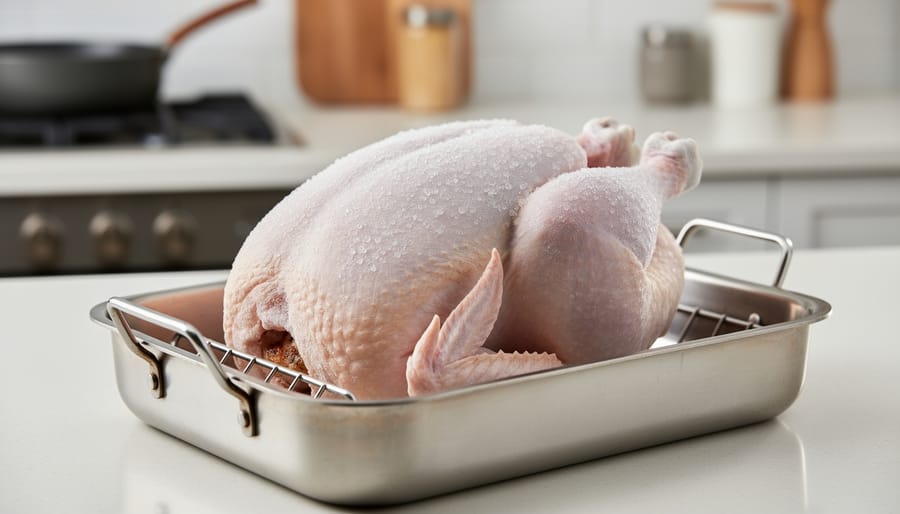
Getting everything ready before you start cooking makes weeknight turkey breast preparation go smoothly. You don’t need a lot of specialized gear, just a handful of basics that ensure even cooking and food safety. While you might already have most of these items, it’s worth double-checking before you preheat the oven. If you’re looking to upgrade your cookware, you might find helpful roasting tools or explore kitchen tools alternatives to streamline your setup.
- Frozen Butterball turkey breast (still in its package until you’re ready to cook)
- Roasting pan with a rack to elevate the turkey, allowing heat to circulate underneath for even cooking
- Meat thermometer, preferably a digital instant-read model, to verify the center reaches 165°F safely
- Aluminum foil for tenting the breast if it browns too quickly during cooking
- Oven mitts to protect your hands when handling hot pans and rotating the turkey if needed
The meat thermometer deserves special mention because it’s your only reliable way to confirm food safety. Guessing doneness by appearance or cook time alone can lead to undercooked poultry, which is risky, or overcooked turkey that’s dry and disappointing. A digital instant-read thermometer gives you an accurate reading in seconds, taking the guesswork out of weeknight cooking. The roasting rack matters too, it keeps the bottom from sitting in juices and promotes even browning all around.
Important Safety and Prep Reminders
Cooking a Butterball turkey breast from frozen is both safe and surprisingly convenient, you skip the long thaw and still get excellent results. The USDA has long approved cooking poultry from frozen, provided you follow one critical rule: the center must cook to 165°F to destroy harmful bacteria. That’s your non-negotiable food safety benchmark, and it’s why a reliable meat thermometer is essential for this method.
Beyond temperature, take simple precautions to avoid cross-contamination. Work on clean surfaces, wash your hands after handling raw poultry, and never reuse plates or utensils that touched the uncooked turkey without washing them first. Once your turkey is in the oven, resist the urge to poke, prod, or repeatedly check it, opening the door drops the temperature and extends cooking time.
One note: Butterball packages provide core instructions like oven temperature and the target internal temp, but some details (such as exact resting times or specific handling warnings) can vary by product line or aren’t always printed. Always read your package carefully and follow any instructions specific to the breast you’ve purchased. When in doubt, stick to the verified basics, 325°F oven, frozen start, 165°F finish, and you’ll be in good shape.
Step-by-Step Cooking Instructions
Step 1: Preheat Your Oven
Start by setting your oven to 325°F (165°C) and let it preheat completely before you put the turkey breast inside. This moderate temperature is ideal for cooking from frozen because it gives the center time to heat through while the outer layers develop a beautiful golden finish without drying out. Higher temperatures might crisp the outside too quickly, leaving the inside undercooked, while lower heat extends cooking time unnecessarily, 325°F hits the sweet spot for even cooking. Don’t skip the full preheat; placing frozen meat in a cool oven throws off timing and can affect texture, making it harder to reach that safe 165°F internal temperature efficiently.
Step 2: Prepare the Frozen Turkey Breast
Take your frozen Butterball turkey breast straight from the freezer, no need to plan ahead or thaw overnight. Remove the outer plastic packaging, but don’t toss it just yet. Check the label for any specific instructions about inner netting or included gravy packets that might be tucked inside. Some packages include a netting that should stay on during cooking, while others may have a gravy packet you’ll want to remove before roasting.
Once unwrapped, place the frozen breast directly on a rack set inside your roasting pan. The rack keeps the meat elevated so heat circulates evenly underneath, preventing the bottom from sitting in its own juices and steaming instead of roasting. There’s no rinsing, no seasoning adjustments to worry about while it’s frozen solid, just set it in the pan and you’re ready for the oven. This simplicity is exactly what makes turkey breast work for a Tuesday night when you forgot to defrost something earlier in the week.
Step 3: Cook from Frozen
Slide the roasting pan with your frozen turkey breast onto the center rack of your preheated 325°F oven. The beauty of cooking from frozen is that you can skip the hours of thawing, just place it in and let the oven do the work.
Timing will depend on the size of your turkey breast. While exact turkey time per pound can vary based on your specific product, plan for a longer cook time than you would for thawed poultry. A frozen turkey breast typically needs several hours in the oven to reach that safe 165°F internal temperature throughout. Check your package for any weight-specific guidance, and build in extra time rather than rushing.
If you notice the skin browning too quickly while the inside is still cooking, loosely tent the breast with aluminum foil. This protects the surface while allowing heat to continue penetrating to the center. Resist the urge to open the oven door frequently to check on progress, each time you do, you release heat and extend the cooking time. Trust the process, and save your thermometer check for later in the cook.
Step 4: Check for Doneness
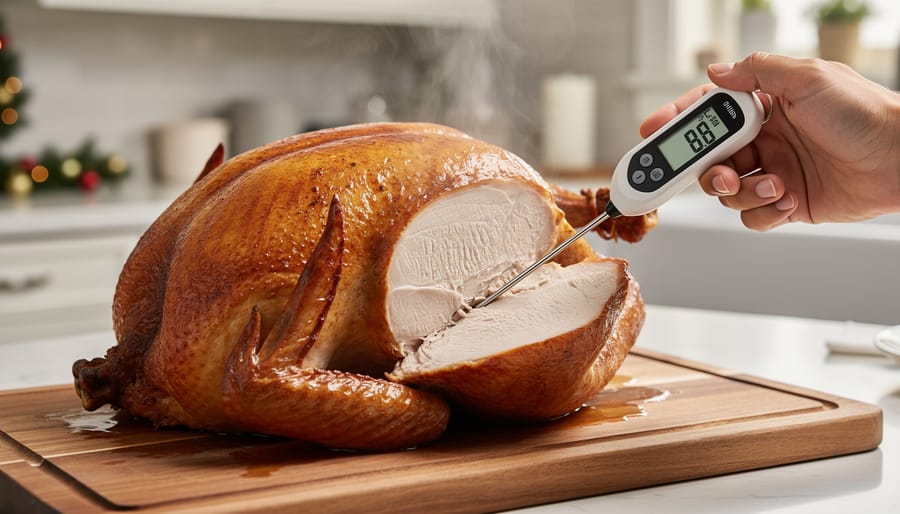
About 20 to 30 minutes before your estimated cooking time is up, grab your meat thermometer, it’s the only reliable way to confirm doneness. Insert the probe into the thickest part of the breast, pushing it deep enough to reach the center without hitting bone or the pan beneath. You’re looking for a steady reading of 165°F.
If the thermometer reads lower than 165°F, simply return the turkey to the oven and check again every 10 to 15 minutes. Don’t rush it, food safety depends on hitting that internal temperature throughout the thickest portion.
Beyond the numbers, a fully cooked turkey breast shows visual clues: the skin turns golden brown, juices run clear (not pink) when you pierce the meat, and the flesh feels firm rather than squishy when gently pressed. However, these signs are helpful supplements, not substitutes for the thermometer. Always confirm with an accurate temperature reading before you take the turkey out of the oven for good.
Step 5: Rest and Serve
Once your turkey breast hits 165°F, remove it from the oven and let it rest before slicing. While official Butterball packages don’t always specify exact resting times, a general rule is to let it sit loosely tented with foil for 10-15 minutes. This allows juices to redistribute, keeping the meat moist when you carve.
For weeknight serving, slice across the grain into portions you need tonight and refrigerate the rest immediately for quick lunches or next-day meals. The rested turkey pairs beautifully with roasted vegetables, mashed potatoes, or tossed into salads and grain bowls throughout the week.
How to Know Your Turkey Breast Is Perfectly Cooked
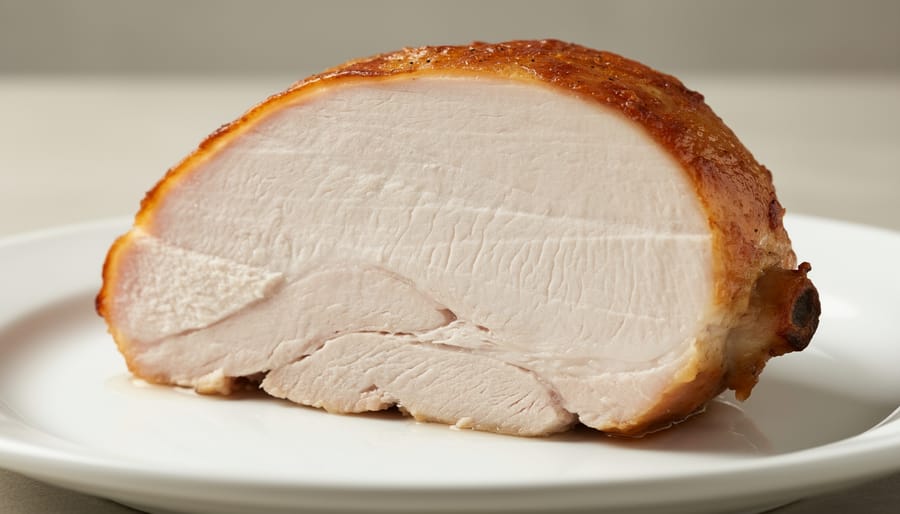
The most reliable way to confirm your Butterball turkey breast is perfectly cooked is by checking the internal temperature with a meat thermometer. Insert it into the thickest part of the breast, making sure you reach the center without touching bone or the pan beneath. When the thermometer reads exactly 165°F, your turkey is both safe to eat and cooked to the right level of doneness, this temperature kills harmful bacteria while keeping the meat juicy.
Beyond the thermometer reading, look for visual signs that your turkey is ready. The skin should have turned a beautiful golden brown, and when you pierce the thickest part with a fork or knife, the juices should run clear rather than pink. Once sliced, the meat itself should appear white throughout with no pink or translucent areas, and the texture should be firm but tender, not rubbery or mushy.
If your thermometer shows a reading below 165°F, simply return the turkey to the oven and continue cooking, checking every 15 minutes until it reaches the target temperature. Don’t worry, turkey breast is forgiving, and it’s far better to cook it a few minutes longer than to serve it undercooked. Following the 165°F rule gives you complete confidence that your weeknight dinner will be both safe and delicious.
Adapting These Instructions for Busy Weeknights
The beauty of cooking a Butterball turkey breast from frozen is that it fits surprisingly well into a weeknight routine once you understand the timing. Since the turkey requires minimal hands-on work, just preheating, placing it in the oven, and checking temperature, you can use that cooking time to tackle other tasks, help with homework, or simply relax.
To make the most of this approach on busy evenings, consider these practical strategies:
- Start the turkey when you get home from work and use the cooking time to prepare quick sides like roasted vegetables or a simple salad
- Cook the turkey breast on Sunday and slice it for sandwiches, grain bowls, and wraps throughout the week
- Pair with sides that cook at 325°F alongside the turkey, such as root vegetables or stuffing in a separate dish
- Invest in a programmable meat thermometer with an alarm so you don’t need to constantly check progress
- Slice leftovers immediately after cooling and portion them into containers for grab-and-go lunches
Leftover turkey breast is incredibly versatile for stretching your cooking efforts. Dice it for quick turkey fried rice, shred it into pasta with cream sauce, or layer slices into quesadillas. The mild flavor works well in almost any cuisine, making it far more adaptable than a whole roasted chicken for weeknight meal planning.
If you’re new to cooking turkey breast this way, start on a night when you have a bit of flexibility. Once you’ve done it successfully, you’ll realize how little active work it requires, and it becomes an easy addition to your regular dinner rotation.
Common Questions About Cooking Butterball Turkey Breast
When you’re cooking a Butterball turkey breast for the first time, or trying to fit it into a busy weeknight schedule, a few questions naturally come up. Here are straightforward answers to help you cook with confidence.
Do I need to thaw my turkey breast before cooking?
No, you can cook a Butterball turkey breast straight from frozen. That’s one of the biggest convenience factors for weeknight cooking, no advance planning or thawing time required.
Can I cook it faster at a higher temperature?
While you might be tempted to crank up the heat to save time, it’s best to stick with 325°F (165°C). Higher temperatures can dry out the meat or cause uneven cooking, especially when starting from frozen.
What if I don’t have a meat thermometer?
A meat thermometer is really the only reliable way to confirm your turkey has reached the safe internal temperature of 165°F. If you don’t have one, consider picking up an inexpensive instant-read model, it’s a worthwhile investment for any protein you cook.
Can I season a frozen turkey breast before cooking?
Seasonings won’t stick well to a frozen surface, so it’s best to wait until the turkey has cooked partway and the surface has thawed slightly. You can brush on melted butter or oil and sprinkle seasonings during the last hour of cooking for better flavor.
How long will leftovers keep in the fridge?
Cooked turkey breast will stay fresh in an airtight container in the refrigerator for three to four days. Reheat leftovers to 165°F before serving, and you’ll have quick protein ready for sandwiches, salads, or grain bowls all week.
These questions cover the practical concerns most home cooks face when working with frozen turkey breast. If something still feels unclear, trust the instructions on your specific package and use your thermometer as the final word on doneness.
Cooking a Butterball turkey breast from frozen really is easier than you might think. No thawing, no complicated prep, just a preheated oven, a reliable thermometer, and a couple of hours until you have tender, flavorful turkey on the table. It’s a weeknight win that doesn’t require elaborate planning or stress.
We’d love to hear how your turkey breast turned out! Share your results in the comments below, ask any questions that came up while cooking, or let us know how you used the leftovers. If you’re looking for more poultry inspiration, explore our other turkey and chicken recipes, all put through our recipe testing process to ensure they work beautifully in your kitchen. Happy cooking!